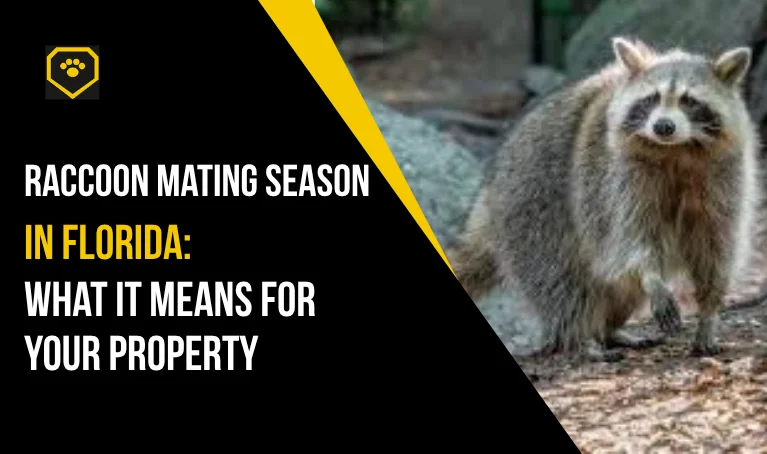
If you’ve been hearing strange screaming or chattering sounds from your attic late at night, or you’ve noticed a sudden increase in knocked-over trash cans and torn-up yard debris, there’s a good chance raccoon mating season is underway. In Florida, raccoons don’t follow the same schedule as northern populations — the warm climate shifts their breeding calendar earlier, which means homeowners need to be prepared sooner than they might expect. Understanding when and why raccoons become most active during mating season is the first step to keeping them out of your home.
When Is Raccoon Mating Season in Florida?
In Florida, raccoon mating season typically runs from December through March, with January and February representing the peak activity period. This is earlier than raccoons in colder states, where breeding may not begin until February or March. Florida’s mild winters allow raccoons to begin their reproductive cycle weeks ahead of populations further north.
Female raccoons (sows) are only in estrus for a short window — roughly three to four days — which drives males (boars) to roam widely in search of mates. A single male may travel several miles per night during peak mating season, entering yards and properties he would not visit during calmer times of year.
After mating, gestation lasts approximately 63 to 65 days. This means most Florida raccoon litters are born between March and May. Female raccoons carry between two and five kits per litter, and they need a secure, dark, warm den site to give birth and raise their young. That search for a denning location is one of the main reasons mating season dramatically increases raccoon intrusions into attics, crawl spaces, and chimneys.
Also Read: Raccoon Scat Identification Guide
How Raccoon Behavior Changes During Mating Season
Raccoon behavior shifts noticeably between November and April in Florida. Several behavioral changes are worth knowing because they affect both the likelihood of an encounter and the risks involved.
Males Roam Farther and Fight More
During mating season, male raccoons expand their home ranges dramatically. A boar that normally stays within a half-mile radius may travel two to three miles per night while searching for receptive females. This increased movement brings raccoons into neighborhoods, subdivisions, and wooded residential areas they don’t visit during the rest of the year. Males also become more aggressive with each other during this period, and territorial fighting is common — you may hear loud screeching and growling near your property at night.
Females Seek Denning Sites Aggressively
Once a female is pregnant, her behavior shifts from mating-driven roaming to urgent denning. A pregnant sow will actively probe structures for entry points — loose soffits, damaged roof vents, uncapped chimneys, and gaps in fascia boards are all vulnerable. She will push, claw, and even tear through roofing material to access an attic that she finds suitable. Attics offer exactly what a denning female needs: warmth, darkness, and protection from predators.
A female raccoon with kits in your attic is significantly harder to remove than a solitary adult. She is highly motivated to protect her young and will return repeatedly even after non-lethal deterrents are applied. The safest and most effective approach at that stage is professional trapping and exclusion.
Vocalizations Increase Significantly
Raccoons are surprisingly vocal animals, and mating season amplifies this considerably. The sounds associated with raccoon mating can include high-pitched screaming, chattering, purring, and what many homeowners describe as a crying or wailing sound. If you’re hearing these noises from your attic or near your roofline during winter and early spring, there is a strong chance raccoons are actively using your home as a denning site.
Helpful for you: Raccoon Sounds Identification Guide
Signs of Raccoon Activity During Mating Season
Mating season creates a pattern of specific signs that Florida homeowners should watch for between December and April. The earlier you identify raccoon presence, the easier and less costly it is to address.
- Disturbed trash cans: Increased foraging by roaming males leads to more frequent raids on unsecured garbage bins, especially overnight.
- Tracks near the roofline: Look for muddy or dirty paw prints on roof edges, downspouts, and AC condenser units — raccoons use all of these as climbing routes.
- Scratching sounds in the attic: Particularly at night or in the early morning hours. Female raccoons are most active in the hours before dawn when preparing a nest.
- Torn soffit panels or damaged roof vents: Physical damage to the exterior of the roofline is a reliable indicator that a raccoon has already entered or is attempting to enter.
- Droppings near entry points: Raccoon latrines often form near den entrances. The droppings are tubular, roughly 2–3 inches long, and may contain visible berry seeds or insect fragments.
Why Mating Season Is the Worst Time to Ignore a Raccoon Problem
Many homeowners hear raccoon activity and wait to see if it resolves on its own. During mating season, waiting is a costly mistake. A female raccoon that successfully dens in your attic in February will have kits by April. At that point, you are dealing not with a single animal but with a family group. Kits cannot be trapped and relocated without the mother, and a nursing female is both more dangerous to approach and more persistent in returning to her den site.
Beyond the difficulty of removal, raccoon presence in an attic causes significant structural damage. Raccoons tear up insulation for nesting material, defecate and urinate in concentrated latrine areas (which creates a serious health hazard from raccoon roundworm, Baylisascaris procyonis), and can damage electrical wiring. Remediation after a raccoon family occupies an attic is a major expense that professional removal before birth would have prevented.
Must Read: Raccoon Tracks Identification Guide
What You Can Do to Protect Your Property During Mating Season
There are practical steps Florida homeowners can take to reduce their risk during raccoon mating season. None of these require a professional visit on their own, though a professional inspection is always the safest option if you’re hearing signs of activity.
1. Inspect Your Roofline Before January
Walk the perimeter of your home and use binoculars to check for loose or missing soffit panels, damaged roof vents with torn screens, uncapped chimneys, and gaps where the roofline meets the fascia board. Any opening larger than four inches is large enough for a raccoon to enter. If you see damage, have it repaired before female raccoons begin their denning search in January.
2. Secure All Trash Cans
Roaming males during mating season are opportunistic feeders. Use raccoon-proof trash containers with locking lids, or store bins in a locked garage until the morning of collection. This removes a primary attractant from your property and reduces the frequency of nighttime visits.
3. Remove Outdoor Food Sources
Bird feeders, pet food bowls left outside, fruit fallen from citrus or other trees, and unsecured compost bins all attract raccoons. During mating season, the combination of increased male activity and pregnant females seeking food makes these attractants particularly problematic. Bring in pet food each evening and clean up fallen fruit promptly.
4. Cap Your Chimney
Uncapped chimneys are among the most common raccoon entry points in Central Florida homes. A female raccoon views a chimney exactly as she would a hollow tree — it’s dark, protected, and thermally stable. A commercial chimney cap with mesh sides blocks access entirely and is a one-time installation that prevents repeated problems.
5. Trim Tree Limbs Away From the Roofline
Raccoons use overhanging branches as bridges to your roof. Trim any limbs that come within six to eight feet of your roofline, and consider installing metal predator guards around the trunks of trees near the house. This doesn’t stop raccoons entirely but significantly reduces the ease of roof access.
You May Also Like: Summer Wildlife Activity in Central Florida
6. Install Motion-Activated Lighting and Sprinklers
Motion-activated lights and water deterrents can interrupt raccoon activity in specific areas of your yard, such as near trash cans, gardens, or known entry points. These are most effective as supplements to other exclusion methods rather than as standalone solutions.
7. Listen for Signs of Denning Activity
During January through April, pay close attention to sounds in your attic. Nighttime scratching, movement sounds, and the distinctive vocalizations of raccoon kits (a high-pitched chittering or crying sound) are the clearest indicators that a family has already established a den. At that point, professional removal is the only effective option.
8. Call a Licensed Wildlife Trapper If You Hear Activity
If you hear raccoons in your attic during mating season — or if you notice fresh signs of entry — contact a licensed nuisance wildlife trapper immediately. Trapping a nursing female without also recovering her kits results in kits dying in the attic, which creates a serious odor issue and a disease risk. A professional trapper will locate and remove the entire family group, seal the entry points, and assess the damage.
Florida Law and Raccoon Removal During Mating Season
Raccoons are classified as non-game wildlife under Florida Statute 379.2291 and are regulated by the Florida Fish and Wildlife Conservation Commission (FWC). Florida law does allow homeowners to trap nuisance raccoons on their own property using cage traps, but there are important restrictions. Trapped raccoons must be released within 24 hours or euthanized — they cannot be relocated to another location without a permit. Transferring a raccoon to another property or releasing it in a park or preserve is illegal under FWC rules.
For most homeowners, particularly those dealing with a female and kits during mating season, calling a licensed nuisance wildlife trapper is the safest, most legal, and most effective option. A licensed trapper carries the permits necessary to legally handle, transport, and manage raccoon removal under all circumstances.
How CFL Trappers Can Help You
Central Florida Trapper provides licensed raccoon inspection, trapping, and exclusion services across Central Florida, including Orlando, Kissimmee, Lakeland, and the surrounding areas. If you’re hearing sounds in your attic during mating season, or if you’ve found signs of raccoon entry on your roofline, our team can inspect the full structure, safely remove any raccoons present — including nursing females and kits — and seal all identified entry points. We carry all required FWC permits and handle everything from single-animal removal to full attic restoration. Call 813-566-9453 any day of the week — emergency dispatch is available 24/7.
Conclusion
Raccoon mating season in Florida runs roughly December through March, with peak activity in January and February. During this period, male raccoons roam farther than usual, pregnant females aggressively search for denning sites, and the risk of attic intrusion is at its highest point of the year. Inspecting your roofline before January, securing food sources, and sealing potential entry points are the most effective preventive steps. If raccoons are already active in or around your home, the time to act is before kits are born — not after. The longer you wait, the more complex and costly the removal becomes.
Frequently Asked Questions About Raccoon Mating Season in Florida
When does raccoon mating season start in Florida?
Raccoon mating season in Florida typically begins in December and peaks in January and February. Births occur approximately 63 to 65 days after mating, meaning most kits are born between March and May.
Are raccoons more aggressive during mating season?
Male raccoons become more territorial and aggressive toward other males during mating season. Pregnant and nursing females also become more defensive and will bite or scratch if cornered. It is important to avoid approaching or attempting to handle raccoons during this period.
Why do I hear raccoons in my attic in winter?
Raccoon activity in Florida attics increases during winter because this coincides with mating season and pregnant females seeking denning sites. An attic provides exactly what a pregnant female needs: warmth, darkness, and protection. If you hear noises in your attic between December and April, a raccoon family is a primary suspect.
Can I remove raccoons from my attic myself during mating season?
Homeowners in Florida can legally set cage traps on their own property, but removing a nursing female without also securing her kits results in kits dying inside the attic. This creates both a serious odor problem and a health hazard. Professional removal is strongly recommended during mating season to ensure the entire family group is safely removed.
What do raccoon kits sound like in the attic?
Raccoon kits produce a high-pitched chittering or crying sound, sometimes described as a bird-like chirping. Nursing mothers also produce soft purring and chattering sounds near the nest site. These vocalizations are most audible in the early morning hours, between approximately 3 a.m. and sunrise.