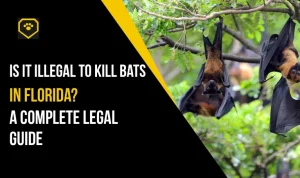
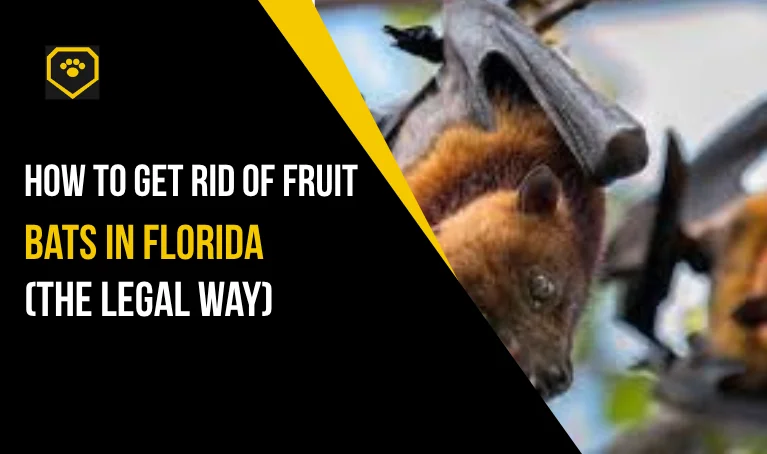
If you’ve spotted bats roosting on your property and someone called them “fruit bats,” there’s a good chance there’s some confusion about what you’re actually dealing with. Florida does not have native fruit bats — every bat species in the state is an insect-eater — but the problem is real regardless of what you call them. Bats roosting in attics, soffits, and wall voids cause serious structural damage and create significant health hazards. The challenge is that removing them legally requires following specific rules that most homeowners are not aware of. This guide explains what bats are actually in Florida, why all of them are protected by law, and how to get rid of them the right way.
Are There Fruit Bats in Florida?
The short answer is no. True fruit bats belong to the family Pteropodidae (also called megabats or Old World fruit bats) and are found in tropical and subtropical regions of Africa, Asia, and Australia. None of these species are native to Florida or anywhere else in North America. When Floridians refer to “fruit bats,” they are typically describing one of Florida’s native insectivorous bat species — particularly larger ones that are visible at dusk — or they’ve encountered a bat roosting near fruit trees and drawn a connection that isn’t taxonomically accurate. Florida is home to 13 native bat species, all of which eat insects. The most common species encountered by homeowners include:
- Brazilian free-tailed bat (Tadarida brasiliensis) — The most numerous and widespread bat in Florida. Colonies can number in the thousands. This species frequently roosts in attics and building voids.
- Evening bat (Nycticeius humeralis) — A medium-sized bat that forms maternity colonies in buildings. Often confused with larger species by homeowners unfamiliar with bat identification.
- Seminole bat (Lasiurus seminolus) — A tree-roosting species that rarely enters buildings but is frequently seen at dusk.
- Big brown bat (Eptesicus fuscus) — Larger and slower-flying than the free-tailed bat, often described as looking larger than expected. Sometimes called a “fruit bat” by homeowners due to its size.
- Florida bonneted bat (Eumops floridanus) — The largest bat native to Florida. Federally listed as endangered under the Endangered Species Act. Found primarily in South and Central Florida.
Regardless of which species is on your property, the legal framework for removal is the same: all Florida bat species are protected, and extermination is not a legal option.
Helpful for you: Is It Illegal to Kill Bats in Florida?
Why All Florida Bats Are Protected by Law
Florida bats are protected under two overlapping legal frameworks. Under Florida Statute 379.2291 and Florida Administrative Code 68A-4.001, all native non-game wildlife — which includes every Florida bat species — is protected from being killed, trapped, harassed, or possessed without a valid permit from the Florida Fish and Wildlife Conservation Commission (FWC). This protection applies to individuals on their own property.
Additionally, the Florida bonneted bat and the tri-colored bat (Perimyotis subflavus) are protected under the federal Endangered Species Act. Killing, injuring, or harassing a listed species carries federal penalties far more severe than state-level violations. The tri-colored bat, once common throughout Florida, was listed as a threatened species by the U.S. Fish and Wildlife Service in 2023 due to dramatic population declines caused by white-nose syndrome.
The practical consequence of these protections is straightforward: you cannot poison, kill, or physically trap bats to remove them from your property. The only legal method of bat removal in Florida is exclusion.
Must Read: Bat Tracks Identification Guide
Florida’s Bat Maternity Season: The Most Important Date You Need to Know
Florida law establishes a bat maternity season from April 15 through August 15 each year. During this period, bat exclusion — even using legal exclusion methods — is prohibited on residential structures. This window protects nursing female bats and their non-flying young, called pups. If exclusion devices are installed during the maternity season, adult bats can exit but cannot return, while pups that cannot yet fly are trapped inside the structure and die. The resulting decomposition creates an odor problem and a contamination risk that is far worse than the original bat presence.
The maternity season restriction applies regardless of species, colony size, or how long the bats have been present. If you discover bats in your attic in May, you must wait until after August 15 to begin exclusion — and you should use this window to have a licensed professional inspect the structure and prepare an exclusion plan so work can begin immediately when the season ends.
How to Get Rid of Fruit Bats (or Any Bat) in Florida Legally
Legal bat removal from a Florida structure follows a specific process. Skipping any of these steps creates either a legal violation, an ineffective outcome, or both.
1. Confirm Bat Species and Colony Size
Before any exclusion work begins, a licensed wildlife inspector should identify the bat species present and estimate the colony size. Colony size affects the number and placement of exclusion devices, and species identification matters if a listed species like the Florida bonneted bat or tri-colored bat is present. The inspection should also document all entry points used by the colony.
2. Verify That Maternity Season Has Ended
Confirm that the date is after August 15 before beginning any exclusion work. Exclusion performed between April 15 and August 15 is illegal under Florida law, regardless of who performs it. A reputable licensed trapper will not perform exclusion during the maternity window.
3. Install One-Way Exclusion Devices Over All Primary Entry Points
One-way exclusion devices allow bats to exit the roost at dusk but prevent them from re-entering. Common exclusion devices include flexible tubes, netting with a free lower edge, and commercial bat cones. The device must be correctly sized for the species involved — free-tailed bats use different openings than evening bats. All secondary and tertiary entry points must be sealed with caulk, foam backer rod, hardware cloth, or metal flashing before the primary exclusion device is installed. Bats that cannot return through the main entry will find and exploit any unsealed gap.
You May Also Like: Bat Sounds Identification Guide
4. Leave Exclusion Devices in Place for a Minimum of Three to Five Days
Exclusion devices should remain in place for at least three to five consecutive nights to ensure all bats have exited. During periods of cold weather, bats may enter torpor and not exit nightly, so a longer exclusion window may be needed. Monitor the exclusion site at dusk for activity to confirm that the colony has fully vacated.
5. Seal All Entry Points Permanently
Once the colony has vacated, remove the exclusion devices and seal the primary entry point using a permanent material — metal flashing, caulk, or hardware cloth — that matches the surrounding material. Reconfirm that all secondary entry points identified during the inspection have been sealed. A property with a single unsealed gap can be re-colonized within one season.
6. Clean and Decontaminate the Roosting Area
Bat guano (droppings) accumulates rapidly in roosting areas and should be professionally cleaned after the colony has been excluded. Bat guano can support the growth of Histoplasma capsulatum, a fungal pathogen that causes histoplasmosis when disturbed dried guano releases spores into the air. Cleanup requires proper protective equipment, including an N95 or P100 respirator, gloves, and disposable coveralls. Contaminated insulation typically must be removed and replaced. Do not attempt guano cleanup without proper protective equipment.
7. Install a Bat House Nearby (Optional but Recommended)
Bats that are excluded from a building will seek an alternative roosting site. Installing a properly designed bat house on your property provides an alternative structure and helps retain the pest-control benefits of a local bat colony — a single Brazilian free-tailed bat eats approximately 2,000 to 3,000 insects per night.
8. Schedule a Re-Inspection the Following Season
Bat exclusion seals that are effective in year one can deteriorate over time — particularly in Florida, where heat, UV exposure, and rain erode caulk and foam. Schedule a follow-up inspection the season after exclusion to confirm that no new entry points have developed and that the seal is still intact.
Why DIY Bat Exclusion Frequently Fails
Bat exclusion is conceptually simple — let them out, don’t let them back in — but it fails in practice when homeowners underestimate the number of entry points a colony uses or install exclusion devices incorrectly. Bats are capable of fitting through gaps as small as 3/8 inch by 1 inch. A single missed gap undermines the entire exclusion.
DIY exclusion also creates legal risk. Performing exclusion during the maternity season — even unintentionally — is an FWC violation. A licensed wildlife trapper knows the timing requirements, inspects for all entry points using professional tools, and is accountable for the outcome in a way that a homeowner performing DIY work is not.
Health Risks Associated With Bat Roosts in Florida Homes
Beyond the legal and structural issues, bat roosts in occupied buildings create two primary health concerns that make prompt, professional exclusion important:
- Rabies: Florida bats are a primary vector for rabies in the state. A bat found inside a living area — particularly one that may have had contact with a sleeping person — should be treated as a potential rabies exposure. Contact the Florida Department of Health and do not release or kill the bat before confirming whether rabies testing is warranted. The bat should be captured in a container without direct contact and submitted for testing if exposure cannot be ruled out.
- Histoplasmosis: As noted above, dried bat guano can harbor H. capsulatum spores. Disturbing accumulated guano during cleaning without respiratory protection can result in histoplasmosis, a fungal lung infection that ranges from mild flu-like symptoms to severe respiratory illness in immunocompromised individuals.
How CFL Trappers Can Help You
Central Florida Trapper provides licensed bat inspection, exclusion, and guano remediation services throughout Central Florida, including Orlando, Kissimmee, Tampa, Lakeland, and surrounding areas. If you have bats roosting in your attic, soffits, or wall voids — whatever you’re calling them — our team will identify the species, document all entry points, and implement a complete exclusion plan that complies with Florida’s maternity season restrictions. We carry all required FWC permits and handle everything from single-colony exclusions to large multi-structure bat problems. Call 813-566-9453 any day of the week — emergency dispatch is available 24/7.
Conclusion
There are no fruit bats in Florida. Every bat species in the state eats insects, not fruit — but that distinction doesn’t change the fact that bats roosting in your home need to be removed safely and legally. All Florida bats are protected under state and federal law, which means extermination is never a legal option. The only lawful removal method is exclusion, and that exclusion must occur outside the April 15 through August 15 maternity season. A licensed wildlife trapper can inspect your structure, plan the exclusion, and ensure the work is done correctly, legally, and completely. Attempting to handle bats without professional guidance usually results in an incomplete exclusion, a legal violation, or both.
Frequently Asked Questions About Bats in Florida
Are there fruit bats in Florida?
No. Florida has no native fruit bat species. All 13 native Florida bat species are insectivores — they eat insects, not fruit. When people refer to “fruit bats” in Florida, they are typically describing one of the native insectivorous species, most commonly the Brazilian free-tailed bat, Evening bat, or Big brown bat.
Is it illegal to kill bats in Florida?
Yes. All Florida bat species are protected as non-game wildlife under Florida Statute 379.2291. Killing, trapping, or harassing bats without an FWC permit is illegal. Two species — the Florida bonneted bat and the tri-colored bat — are additionally protected under the federal Endangered Species Act, with much higher penalties for violations.
When can I legally remove bats from my home in Florida?
Bat exclusion (the only legal removal method) can only be performed outside the maternity season, which runs from April 15 through August 15 in Florida. Exclusion performed during this window is illegal, as it traps non-flying pups inside the structure.
What should I do if I find a bat inside my house?
Do not handle the bat with bare hands. Contain it in a room or use a box or container to trap it against a wall without direct contact. If anyone in the home may have been exposed while sleeping — particularly if found near a sleeping area — contact the Florida Department of Health immediately. A bat inside the living space of a home is treated as a potential rabies exposure until ruled out.
How much does bat exclusion cost in Florida?
The cost of professional bat exclusion in Florida varies based on the size of the colony, the number of entry points, the accessibility of the roosting area, and whether guano remediation is needed. A licensed wildlife trapper can provide an on-site assessment and quote after inspecting the structure. Attempting DIY exclusion and failing typically results in a higher total cost than professional exclusion from the start.