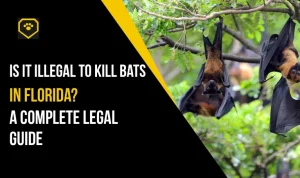
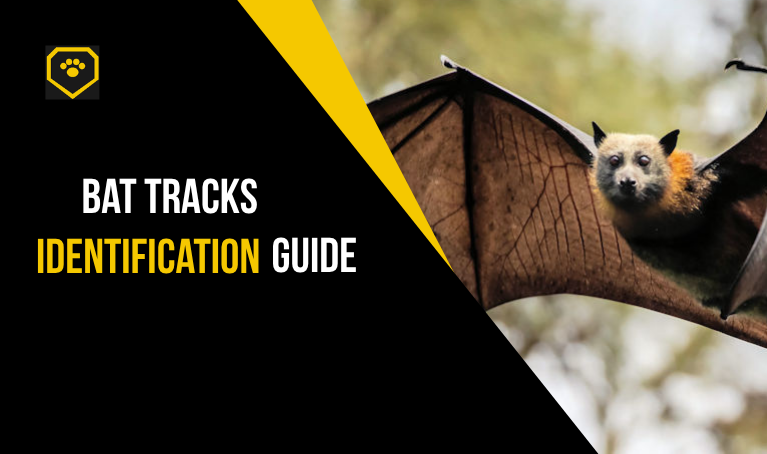
Bat tracks are one of the most unusual wildlife signs you will ever try to identify. Unlike raccoons, squirrels, or rats, bats fly almost everywhere they go and rarely walk on the ground. As a result, identifying bat activity in Central Florida very rarely involves traditional paw prints — but it absolutely involves identifiable physical signs that a bat has been moving across a surface, climbing a wall, or roosting in a structure. This guide explains what bat “tracks” actually look like, where to find them, how they differ from real footprints, and what they indicate about bat activity around your home.
Do Bats Leave Footprints?
Technically yes, but they are extremely small and almost never seen in residential settings. A bat’s foot is roughly the size of a fingernail clipping, with five tiny clawed toes used for clinging upside-down to surfaces. Even when bats walk briefly across dust or guano, the footprints are too faint and too overlapping to identify the way you would identify a raccoon or squirrel print.
That is why “bat tracks” in Central Florida usually refers to a different set of physical clues: the staining, smudging, and crawl marks that bats leave on the surfaces around their roost entry points.
What Bat Sign Looks Like on Surfaces
Brown Body Oil Streaks
The most common and reliable bat track is a brown or yellow-brown oily stain on the exterior wall, fascia, or soffit directly beneath an entry hole. As bats squeeze in and out of a small gap multiple times per night, the natural oils in their fur transfer to the wall. Over weeks and months, the stain darkens and lengthens, eventually forming a vertical streak several inches long. These streaks are unmistakable and almost impossible to confuse with anything else.
Polished or Smoothed Wood
At repeatedly used entry points, the wood around the gap is often polished smooth and slightly darkened. This is essentially a long-term wear pattern caused by bat fur and bodies sliding through the same opening hundreds or thousands of times.
Guano Smears Below the Roost
Beneath an active entry point, guano smears and small dark specks accumulate as bats relieve themselves on the way in or out. These smears can streak down stucco walls, vinyl siding, or fascia and are usually concentrated in a narrow vertical strip directly beneath the gap.
Crawl Marks in Attic Dust
If a bat lands on dusty insulation or attic plywood, it sometimes drags itself short distances using its wings and feet. The result is a faint scuff pattern with thin parallel lines from the wing edges and a small smudge in the middle from the body — quite different from the bounding paw prints squirrels or rats leave.
Where to Look for Bat Sign in Central Florida
Florida bats prefer high, dark, dry, undisturbed roosts that allow them to drop downward into flight. Common Central Florida locations include:
- Gable vents, ridge vents, and louvered attic vents
- Soffit return corners and small fascia gaps
- Loose flashing around chimneys, skylights, and roof penetrations
- Underneath barrel and Spanish roof tiles
- Vent stacks and improperly sealed plumbing or HVAC penetrations
- Behind shutters, under porch ceilings, and inside chimney flues
Inspect your house from a distance just before sunset. If bats are roosting in your home, you will often see them dropping out of an opening within 20 to 40 minutes of dark. The opening they are emerging from is your entry point.
How to Tell Bat Sign From Other Animals
Bats vs. Rats and Mice
Rats and mice leave grease marks along baseboards, sill plates, and travel routes inside the home — these are horizontal smears at floor or beam level. Bat oil streaks, by contrast, are vertical and located outside on the wall directly beneath an aerial entry hole. Rodents also leave clear paw prints in dust; bats almost never do.
Bats vs. Birds
Birds nesting in soffits or vents often leave straw, twigs, and feathers around the entry, none of which bats produce. Bird droppings are also white-and-black with no insect fragments, while bat droppings beneath an entry are uniformly dark and crumble into dust.
Bats vs. Wasps and Bees
Wasp and bee activity at a small opening can superficially look like bat activity, but you will see actual insects flying in and out. Bats only use their entry points at dusk and dawn.
What Bat Sign Tells You About Activity
A faint or short oil streak with a small amount of guano usually indicates a small or transient roost — perhaps one or two bats. Long, dark streaks with significant guano accumulation suggest an established colony, which in Central Florida often means a maternity colony of female bats raising pups between April and August.
The size of the colony matters because larger groups produce more guano (raising the histoplasmosis risk), cause more odor problems, and require more careful exclusion. Maternity colonies cannot legally be excluded between April 16 and August 14 in Florida, so the time of year you discover the activity strongly affects your options.
What to Do When You Find Bat Sign
- Photograph the streaks, stains, and any guano accumulations from a safe distance
- Note the location of the entry point on the structure
- Watch the area at dusk to confirm whether bats are emerging
- Do not seal, spray, or disturb the entry point yourself
- Keep pets and children away from any visible droppings
When to Call a Central Florida Bat Removal Specialist
Bats are protected under Florida law, and improper exclusion can leave dependent pups trapped inside walls or attic spaces. Professional bat removal is the only safe, humane, and legal solution. Central Florida Trapper performs licensed bat inspections, one-way exclusion, full attic decontamination, and structural sealing across the Orlando metro area. If you have spotted oil streaks, guano accumulations, or live bats emerging from your home at dusk, contact us as soon as possible — and definitely before maternity season begins each spring.