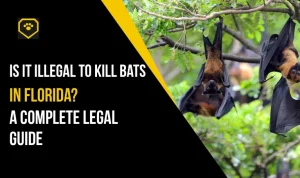
If you have heard faint, high-pitched chirping or a soft fluttering sound coming from your attic, soffit, or chimney just after sunset in Central Florida, you may have bats roosting in your home. Bats are unusual among home-invading wildlife because they are physically tiny, extremely quiet, and produce sounds at frequencies most people cannot fully hear. That said, an active bat colony does generate enough audible noise that homeowners can identify it once they know what to listen for. This guide explains the sounds bats make, when you will hear them in Central Florida, and how to tell bat noise apart from other animals.
🔊 Listen: Real Bat Sounds
Use the video below to hear what bats actually sound like. Recognising these sounds can help you identify whether you have a bat on your property.
🔊 Audio sample — Freesound.org (Creative Commons)
Why Bats Are Hard to Hear
Most bat communication and all bat echolocation occurs at ultrasonic frequencies above 20 kHz, which is above the upper limit of normal human hearing. To detect echolocation, biologists use special bat detectors that translate ultrasonic clicks into audible signals. Without one of those, you will only hear the small portion of bat vocalization and the physical movement noise that occurs in the audible range — which is still enough to identify a roost.
Common Bat Sounds You May Actually Hear
High-Pitched Squeaking and Chirping
Even though most bat communication is ultrasonic, the lower edge of bat chatter is audible to people with normal hearing. It sounds like a thin, rapid squeaking or chirping — almost like a small bird or mouse — and is loudest just before bats emerge in the evening and just after they return at dawn. This is the most identifiable bat vocal sound in Central Florida homes.
Soft Fluttering and Wing Beats
The sound of dozens of bat wings opening and folding inside an attic is surprisingly distinctive — a soft, papery flutter, sometimes compared to the rustle of leaves or the gentle shake of a paper bag. You will hear it most as the colony stirs at dusk and as it settles back at dawn.
Crawling and Scratching
Roosting bats reposition themselves throughout the day, climbing along beams, walls, and the underside of roof decking using their clawed feet and wing thumbs. The result is faint scratching or scrabbling that is much quieter than a rat or squirrel and is almost always located high up — at the roof line or peak — rather than down at the floor or wall base.
Buzzing and Clicking
Some species, including evening bats and Mexican free-tailed bats common in Central Florida, produce audible clicks and buzzes during social interactions. If you hear a soft, rapid clicking from the same spot in your attic at dusk, it is likely bats interacting before they leave for the night.
When You’ll Hear Bats in Central Florida
Bats are crepuscular and nocturnal, with very predictable activity windows tied to sunrise and sunset:
- 20 to 40 minutes before sunset — colony stirs, increasing chirps and flutter
- 15 to 30 minutes after sunset — peak emergence and audible activity
- Throughout the night — usually silent inside the roost while bats hunt outside
- 30 to 60 minutes before sunrise — return flight and audible chatter
- First hour after sunrise — colony settles, with brief flutter and squeaks
If you hear thumping, scratching, or chittering inside your house in the middle of the night when bats should be hunting outside, you are probably hearing rats, squirrels, or raccoons rather than bats.
How to Tell Bat Sounds From Other Animals
Bats vs. Rats and Mice
Rodents produce steadier scratching, gnawing, and pitter-patter noises throughout the night and inside walls at lower elevations. Bats are quiet during the night, only audible at dusk and dawn, and their noise comes from up at the roofline.
Bats vs. Birds
Bird activity in soffits and gable vents is loudest in the morning and during midday, and birds produce true chirps and warbles rather than the thin squeaks of bats. Birds also rustle nesting material; bats do not build nests.
Bats vs. Squirrels
Squirrels are loud, fast-moving daytime animals — completely opposite of bats. Heavy thumping, gnawing, and rolling acorns in the daytime is squirrel activity, not bats.
Bats vs. Raccoons
Raccoons are heavy, growl, scream, and chitter loudly. If you can hear it from across the room, it is virtually never bats.
What Bat Sounds Tell You About a Colony
Faint, occasional chirps from a small area of the attic at dusk usually mean a small roost of just a few bats. Loud, prolonged fluttering and chatter at dusk and dawn — and especially mid-summer when pups vocalize for nursing — indicates a maternity colony. Maternity colonies often double in size between April and August as pups become weaned and begin flying with the adults.
If you only hear bat sounds outside your house and see them flying around your yard, that is normal. Florida is home to 13 native bat species and they are extremely beneficial — a single bat can eat thousands of mosquitoes per night. The problem only arises when bats roost inside the structure of your home.
What to Do When You Hear Bats in Your Home
- Watch the exterior of your home at dusk for emerging bats and identify the entry point
- Note the time of year — Florida maternity season runs April 16 to August 14
- Look for oil streaks and guano deposits beneath the suspected entry
- Do not seal the opening yourself, especially during maternity season
- Keep pets and children clear of any visible roost
When to Call a Central Florida Bat Removal Specialist
Florida bats are protected, and the only legal removal method is professional one-way exclusion installed outside maternity season. Central Florida Trapper performs licensed bat inspections, humane exclusion, attic decontamination for guano and histoplasmosis risk, and full structural sealing across Orlando, Kissimmee, Sanford, Winter Park, and surrounding communities. If you are hearing bat sounds in your attic, the safest first step is to schedule a professional inspection.