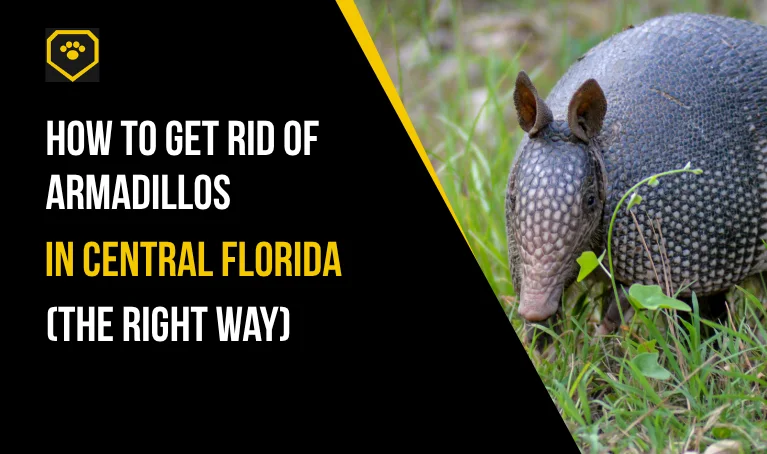
If you’ve walked out to your Central Florida yard and found a series of shallow holes dug overnight, there’s a good chance you have an armadillo problem. These armored diggers are one of the most common nuisance wildlife complaints in the Orlando, Kissimmee, and greater Central Florida area — and once they find your lawn, they don’t stop. Here’s what you need to know about armadillo removal in Central Florida and how to get it done the right way.
Why Armadillos Are Such a Problem in Central Florida
Armadillos love Florida’s warm climate and sandy soil. They root through lawns, flower beds, and vegetable gardens searching for grubs, beetles, and earthworms — their primary food source. A single armadillo can dig dozens of small holes per night, turning a well-kept yard into something that looks like a construction zone.
Beyond cosmetic damage, armadillos can undermine the foundations of sidewalks, driveways, and even home foundations by burrowing underneath them. They’re also known carriers of leprosy — one of the only animals besides humans that can carry the bacterium — though transmission to humans is rare, it’s still a risk worth avoiding.
Why DIY Armadillo Removal Rarely Works
Armadillos are mostly nocturnal and surprisingly elusive. Many homeowners try repellents — mothballs, cayenne pepper, predator urine — and find they have little to no effect. Armadillos simply move a few feet over and keep digging.
Cage trapping is the most effective removal method, but placement, bait selection, and timing matter enormously. Armadillos don’t respond to traditional baits the way raccoons or opossums do. Professionals use their knowledge of armadillo movement patterns and burrow locations to place traps where they’ll actually work.
Also Read: How to Identify Armadillo Scat/Droppings
Is It Legal to Trap Armadillos in Florida?
Yes — armadillos are not protected under Florida state law. Under Florida Fish and Wildlife Conservation Commission (FWC) rules, armadillos can be legally trapped and relocated or humanely euthanized. However, you must release them at least 40 miles from your property or they will find their way back. For most homeowners, this makes professional removal the most practical solution.
How to Get Rid of Armadillos in Central Florida
1. Identify Armadillo Activity on Your Property
Armadillos leave clear signs like small cone-shaped holes in lawns and loose, soft soil patches across your yard. You may also notice damaged flower beds, shallow digging near trees, or burrows close to foundations and fences. These signs usually mean they are actively feeding or nesting nearby at night.
2. Remove Food Sources From Your Yard
Armadillos are strongly attracted to grubs, beetles, worms, and other insects living in the soil. Treating your lawn for pests reduces their main food supply and makes your yard less attractive. A healthier, pest-controlled lawn naturally discourages repeated armadillo visits over time.
3. Seal and Block Burrowing Areas
Close off gaps under decks, sheds, porches, and crawl spaces where armadillos like to dig and hide during the day. Use strong hardware cloth or welded wire mesh buried deep into the soil for better protection. This helps stop them from re-entering or expanding existing burrows under structures.
Helpful for you: Armadillo Tracks Identification Guide
4. Install Physical Barriers Around Gardens
Fencing is one of the most effective long-term deterrents for armadillos in residential areas. Use metal mesh fencing buried at least 12–18 inches underground with an outward bend at the base. This prevents them from digging underneath and accessing gardens, flower beds, or vegetable patches.
5. Keep Your Yard Well-Maintained
Overgrown grass, leaf piles, mulch heaps, and clutter make it easier for armadillos to hide and forage undisturbed. Regular mowing, trimming shrubs, and removing yard debris reduces shelter options significantly. A clean and open yard makes your property far less attractive for nighttime digging.
6. Use Motion-Activated Deterrents
Motion-activated lights, sprinklers, and sound devices can help scare armadillos away during their active nighttime hours. These sudden disturbances interrupt their feeding and digging patterns in the yard. Consistent use encourages them to avoid your property and move to quieter surrounding areas.
Must Read: How to Identify Armadillo Sounds
7. Apply Safe Repellents Around Burrows
Commercial armadillo repellents can be applied around active digging zones, burrow entrances, and commonly used pathways. These products create an unpleasant smell or taste barrier that discourages repeated digging. While not always permanent, they are useful as part of a combined prevention strategy.
8. Fill and Collapse Active Burrows Properly
Never leave open or partially collapsed armadillo burrows exposed in your yard or near foundations. Fill them with compacted soil or gravel only after confirming the animal has left the area. Proper sealing helps prevent re-entry and reduces the risk of structural weakening over time.
9. Control Insect Population in Soil
Since armadillos mainly feed on soil-dwelling insects, reducing grubs and larvae helps significantly lower activity. Use lawn-safe insect control treatments or natural pest control methods if needed for your yard. Less food availability means fewer armadillos returning to dig in the same areas.
10. Call Professional Armadillo Removal Services
If armadillo damage continues or burrowing becomes extensive, professional armadillo removal services are the safest and most effective option. Experts can locate hidden burrows, safely remove armadillos, and apply exclusion techniques to prevent return. This ensures long-term protection and reduces repeated lawn damage issues.
How Professional Armadillo Removal Works
A licensed wildlife trapper will start by inspecting your property to identify active burrow sites, foraging trails, and the extent of the damage. Live cage traps are then placed strategically along the armadillo’s travel routes — not just randomly in the yard. Once trapped, the animal is transported and handled according to FWC guidelines. Many professionals also offer exclusion services after removal: filling and compacting burrows, recommending landscaping changes, and installing barriers to prevent new armadillos from moving in.
How to Make Your Yard Less Attractive to Armadillos
After removal, a few preventive steps can reduce the chance of a new armadillo taking over:
- Remove brush piles, wood stacks, and debris where armadillos shelter during the day
- Use underground wire mesh (hardware cloth) around flower beds and gardens
- Fill existing burrow holes completely with compacted soil
- Reduce ground-level insects with appropriate lawn treatments (reduces their food source)
- Install motion-sensor lights or sprinklers as deterrents
Frequently Asked Questions About Armadillo Removal
Are armadillos dangerous?
Armadillos aren’t aggressive and won’t attack pets or people. Their primary risk is property damage from digging and, in rare cases, disease transmission (leprosy and salmonella). You should avoid handling them directly.
Is it legal to trap armadillos in Florida?
Yes. Armadillos are not a protected species in Florida and can be legally trapped and removed under FWC guidelines. A licensed trapper handles all required transport and disposal procedures.
What kind of damage do armadillos cause?
Armadillos dig shallow holes (typically 3–5 inches deep) across lawns, gardens, and flower beds. They also burrow under driveways, patios, and building foundations, which can cause structural damage over time.
How do professionals trap armadillos?
Professionals use live cage traps placed along active travel routes near burrow entrances. Unlike other wildlife, armadillos respond best to trap placement based on movement patterns rather than food-based bait.
Call CFL Trapper for Fast Armadillo Removal in Central Florida
Armadillo damage gets worse the longer you wait. If you’re seeing fresh holes in your yard or signs of burrowing near your home’s foundation, it’s time to call a professional. CFL Trapper provides fast, humane armadillo removal across Central Florida — including Orlando, Kissimmee, Clermont, and surrounding areas. Contact us today to schedule an inspection.