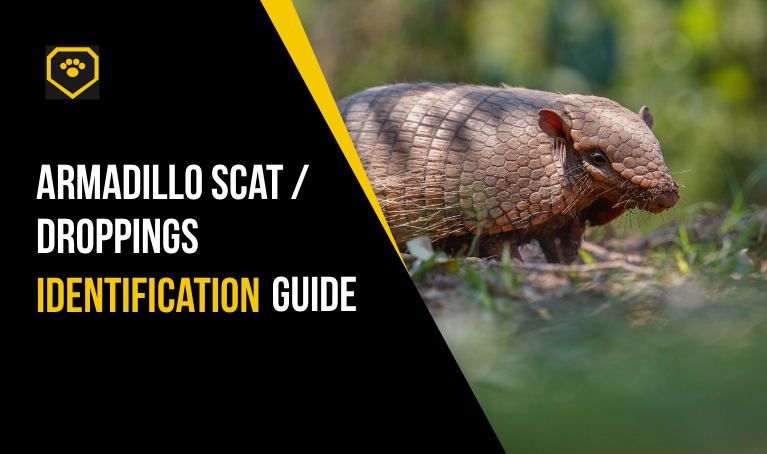
If your Central Florida lawn has been suddenly torn up overnight and you have noticed strange marble-like droppings near the holes, you may be dealing with an armadillo. Nine-banded armadillos have spread aggressively across Florida over the past century and now cause some of the most expensive landscape damage of any nuisance wildlife in the Orlando area. Identifying their droppings is a key first step in confirming the culprit. This guide explains what armadillo scat looks like, where to find it, how it differs from other animal droppings, and what to do once you have confirmed an armadillo on your property.
What Do Armadillo Droppings Look Like?
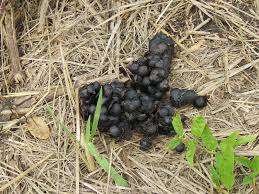
Armadillo droppings are unusual and quite distinctive once you know what to look for. They are firm, dark, marble-like balls — very different from the elongated tubes left by raccoons, opossums, and most other Central Florida mammals.
Size and Shape
Individual droppings are typically 3/4 to 1 inch in diameter, roughly the size of a marble or grape, and almost perfectly round. They are often deposited as small clusters rather than as a single deposit, and the surface is usually smooth and uniform. Larger armadillos can leave slightly larger pellets, and juveniles leave smaller ones, but the marble shape is consistent.
Color and Texture
Color is usually dark brown to nearly black when fresh, drying within a day to a lighter brown and eventually a chalky tan. Texture is dense and hard — armadillo scat is one of the firmest droppings you will encounter from Central Florida wildlife because their diet is almost entirely insects, grubs, and worms, all of which are heavily processed in their digestive system.
Contents
If you crush a dried pellet, you may see fine fragments of insect exoskeletons, sand, and dirt. Armadillos consume large amounts of soil along with their prey, which is why their droppings often have a slightly gritty texture and may include small bits of debris.
Where You’ll Find Armadillo Droppings in Central Florida
Armadillos are creatures of habit and tend to deposit droppings near their burrows, foraging sites, and travel paths. Common locations include:
- Near the entrance to burrows under sheds, decks, or thick landscaping
- In and around the small cone-shaped digs they leave in lawns
- Beneath palm trees, oaks, and dense shrubs where they shelter during the day
- Along fence lines and the foundation of the home
- In flower beds and freshly mulched garden areas
- Near retention pond banks and drainage swales
Because armadillos are mostly active at night and at dawn, the best time to find fresh droppings is in the early morning before lawn maintenance disturbs them.
How to Tell Armadillo Droppings From Other Animals
Armadillo vs. Raccoon Droppings
Raccoon droppings are long tubes filled with seeds and visible food remnants, usually deposited in latrines. Armadillo droppings are round marbles that lack visible plant material. There is essentially no overlap once you have seen them side by side.
Armadillo vs. Rabbit Droppings
This is the most common confusion. Rabbit droppings are also round but smaller — about the size of a pea — and lighter, with a fibrous texture from a plant-based diet. Armadillo pellets are noticeably larger and denser, with a darker color from their insect-based diet.
Armadillo vs. Dog Droppings
Dog droppings are tubular, larger, and softer than armadillo scat. Their composition reflects commercial dog food, which is very different from the gritty insect-based armadillo droppings. Dog droppings also do not appear in clusters of small marbles.
What Armadillo Droppings Tell You About Activity
Finding a few droppings near a small dig in your lawn usually means an armadillo is foraging on your property. Multiple droppings near a burrow entrance — typically a 7 to 10 inch round hole at the base of a shed, deck, foundation, or large tree — strongly indicates that an armadillo has set up residence. Burrows can be up to 20 feet long with multiple chambers, and a single armadillo may have several burrows on a property.
The classic armadillo damage pattern includes:
- Small cone-shaped digs 1 to 3 inches deep across the lawn, especially after rain
- Uprooted flowers, mulch flung across walkways, and disturbed sod
- Burrow openings beneath sheds, AC pads, decks, and concrete slabs
- Damaged sprinkler heads and irrigation lines
- Holes through screen on lower portions of pool cages
Health Risks of Armadillo Droppings
Armadillos are one of the few wild animals known to carry Mycobacterium leprae, the bacterium that causes leprosy (Hansen’s disease). Cases of human transmission are rare, but documented in Florida. Armadillos can also carry salmonella, and their droppings should never be handled without gloves. The biggest concrete risk to most homeowners, however, is the foundation, septic, and slab damage caused by armadillo burrowing rather than the droppings themselves.
What to Do When You Find Armadillo Droppings
- Photograph the droppings and any nearby digs or burrow openings
- Check sheds, decks, and AC pads for burrow entrances
- Inspect lawn and flower beds at dawn for fresh damage
- Avoid handling droppings or attempting to flush armadillos out of burrows
- Address grub populations in your lawn — fewer grubs mean less attractant
Why Armadillo Damage Escalates Quickly in Central Florida
Florida’s sandy, soft soil is ideal for armadillo digging, and the warm climate keeps them active essentially year-round. A single armadillo can dig dozens of holes in a single night, especially after summer rain when the soil is loose and grubs are near the surface. Damage compounds rapidly, and burrows under structures can undermine slabs, AC pads, and pool decks within months.
When to Call a Central Florida Armadillo Removal Specialist
Armadillos are notoriously difficult to trap with do-it-yourself methods because they ignore baited traps — they hunt by smell, not by sight, and they want live insects, not bait. Professional trapping uses funnel-fence techniques and trap placement at burrow entrances, both of which require experience to work consistently. Central Florida Trapper offers licensed armadillo removal, burrow exclusion, and yard restoration across the Orlando metro area. If you have spotted armadillo droppings or fresh dig damage, contact us before the burrowing reaches your foundation.