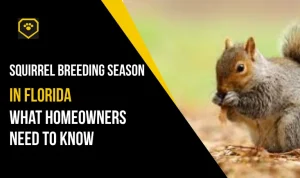
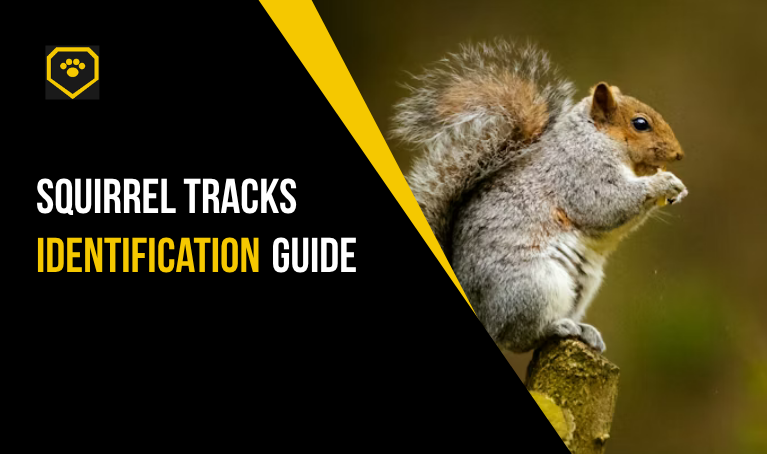
Squirrels are constantly on the move across Central Florida — leaping between oaks, dashing along power lines, and scurrying across attic insulation. While we mostly see them in the trees, squirrels also leave clear, identifiable tracks in mud, sand, dust, and snow-like Central Florida pollen. Learning what squirrel tracks look like helps you confirm whether the small, fast animal damaging your soffit, raiding your bird feeder, or chewing on your patio cushions is actually a squirrel and not a rat, chipmunk, or some other species. This guide breaks down squirrel tracks, where to find them, and what they reveal about activity around your home.
What Do Squirrel Tracks Look Like?
Squirrel tracks are small, neat, and have a very particular bounding pattern that almost no other Central Florida animal produces. Once you recognize that pattern, identification becomes straightforward.
Front Paw Prints
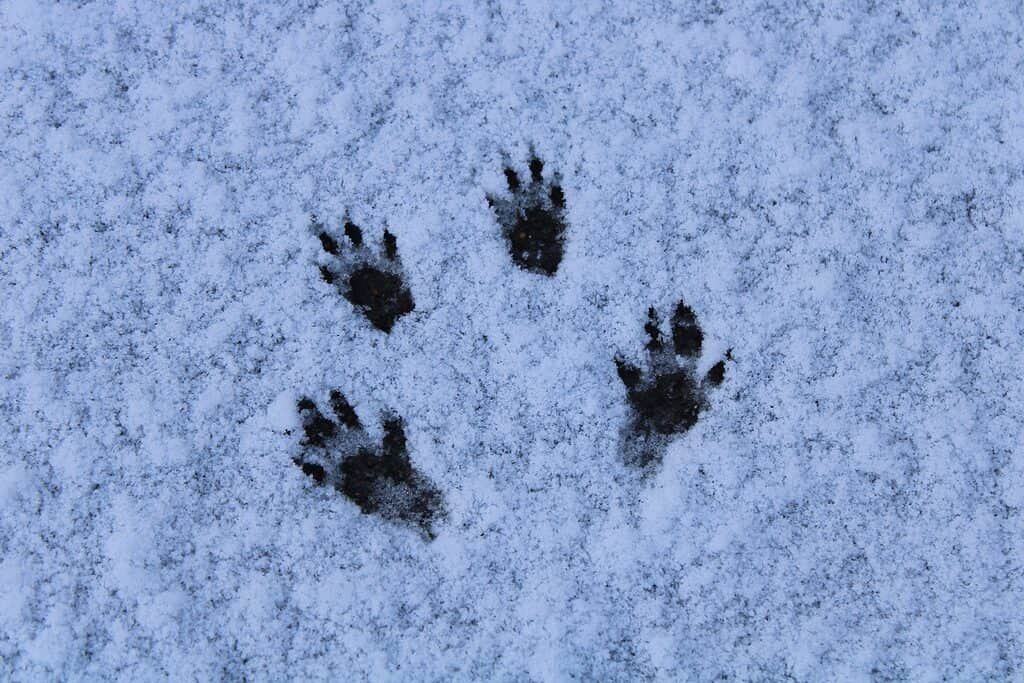
Front paws have four toes and measure roughly 1 to 1.5 inches long. The toes are slender and finger-like, and you may see small claw marks at the toe tips. Squirrels use their front paws like little hands to manipulate seeds and nuts, and the print reflects that — narrow, agile, and clearly defined.
Hind Paw Prints
Hind paws have five toes and are noticeably larger than the fronts — typically 1.5 to 2.5 inches long. The hind print is elongated, with a narrow heel pad and the toes splayed out in a fan shape. The fifth toe is the smallest and sits to the inside of the foot.
Bounding Pattern
The most diagnostic feature of squirrel tracks is the gait. Squirrels bound rather than walk: they push off with both back feet, land on their front paws, then bring the hind paws around outside and ahead of the fronts. The result is a “boxy” four-print pattern with the larger hind prints in front and the smaller front prints behind. Stride between sets is typically 7 to 30 inches depending on speed and terrain. Once you have seen this pattern, you will spot squirrels instantly in any soft surface.
Where to Find Squirrel Tracks in Central Florida
Central Florida’s combination of sandy soil, daily rain showers, and heavy oak pollen creates excellent tracking conditions. Look for squirrel prints in the following locations:
- Pollen-coated patios, lanais, and pool decks during oak pollen season
- Wet sand or mud beneath bird feeders, palms, and live oaks
- Dust on attic insulation, particularly near soffit corners and gable vents
- Mulched garden beds and flower planters
- Pool covers, car hoods, and outdoor furniture in the morning
- Concrete driveways and sidewalks after a rain shower
How to Tell Squirrel Tracks From Other Animals
Squirrel vs. Rat Tracks
Roof rat tracks are the most common look-alike in Central Florida. Rats also have four-toed front paws and five-toed hind paws, but their tracks are slightly smaller and the gait is different — rats walk and trot more often than they bound, leaving paired side-by-side prints rather than the boxy four-print squirrel pattern. Rats also drag their long tails, often producing a thin line between the prints, which squirrels rarely leave.
Squirrel vs. Mouse Tracks
Mouse tracks follow the same general structure but are dramatically smaller — usually under 3/8 inch long. Mice also leave a faint tail drag mark and tend to scurry along walls and edges rather than across open patios.
Squirrel vs. Cat or Small Dog Tracks
Cats and small dogs have only four toes per foot — never five. Their print also has a single rounded heel pad rather than the long, narrow squirrel hind heel. If a print has five toes and is small, it is almost certainly squirrel or rat, not a cat or dog.
Squirrel vs. Opossum Tracks
Opossums also leave five-toed hind prints, but the inner toe is opposable and sticks out at a sharp angle, like a thumb. Squirrel hind prints have all five toes pointing in the same general direction.
What Squirrel Tracks Tell You About Activity
A few squirrel tracks crossing your yard usually mean a normal squirrel passing through — Central Florida is dense with eastern gray and southern fox squirrels, and they cover a lot of ground daily. Tracks that consistently lead to a soffit, roof vent, or attic gable, however, are far more concerning. Repeated tracks on a fence-to-tree-to-roof path almost always indicate a squirrel that has identified an entry into your attic and is using your home as a regular shelter.
Daytime tracks in attic dust or insulation are an even stronger signal, because that means the squirrel is comfortable enough to use the space repeatedly during peak human activity hours.
What to Do When You Find Squirrel Tracks
- Photograph and measure the prints, ideally with a coin for scale
- Trace the line of travel back toward any tree, fence, or roofline access point
- Inspect soffit returns, gable vents, fascia gaps, and roof valleys for chew damage
- Listen for daytime scratching or running sounds in the attic
- Trim tree limbs at least 8 to 10 feet back from the roof to remove access
When to Call a Central Florida Squirrel Removal Specialist
If squirrel tracks are showing up on your roof, in your attic, or repeatedly along the same path to your home, do not wait. Squirrels chew constantly to keep their teeth filed, and the damage they cause to wiring, ductwork, soffits, and insulation can become expensive within weeks. Central Florida Trapper provides licensed squirrel inspection, humane trapping, full attic exclusion, and damage repair across the Orlando metro area. A professional inspection identifies every entry point — even ones invisible from the ground — and seals them with materials squirrels cannot chew through.
If you have spotted squirrel tracks around your Central Florida home, contact Central Florida Trapper to stop the activity before it becomes structural damage.