If you have noticed small dark pellets in your attic, garage, shed, or along the top of a fence in Central Florida, you may be looking at squirrel droppings. Squirrel scat is one of the most reliable signs that a squirrel is denning inside or near your home — and because squirrels chew constantly through wood, wiring, and insulation, identifying their droppings early can save you from very expensive damage. This guide explains exactly what squirrel droppings look like, how to tell them apart from rats and mice, what they reveal about activity, and what to do once you have confirmed them.
What Do Squirrel Droppings Look Like?
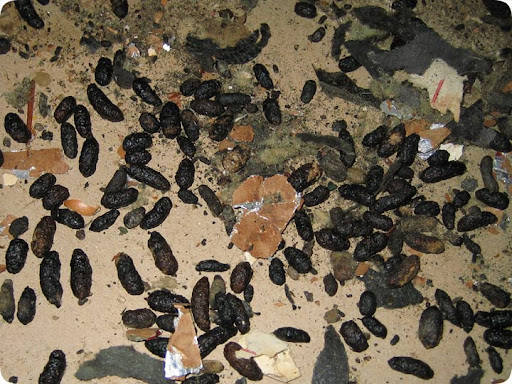
Squirrel droppings are small, oblong pellets that look at first glance like rat droppings, but they are slightly larger, lighter in color, and have rounded rather than tapered ends. Once you have seen them next to a quarter, you will be able to recognize them quickly.
Size and Shape
Individual pellets typically measure 3/8 inch long and 1/8 inch in diameter. They are barrel- or capsule-shaped with rounded ends and a smooth surface. Eastern gray squirrels, the dominant species in Central Florida, leave pellets that are uniform in size and shape — much more uniform than raccoon, opossum, or even rat droppings.
Color
Fresh squirrel droppings are dark brown to nearly black. Within a few days they fade to a lighter brown or reddish brown, and after weeks of exposure they can bleach to a chalky tan or light gray. Color is one of the easiest ways to date droppings: shiny and dark means recent activity, dull and pale means older.
Smell and Texture
Squirrel droppings have a mild, musky odor that intensifies in Central Florida’s humidity, but they are not as pungent as raccoon scat or rat droppings. Texture is firm and dry. Because squirrels eat acorns, palm seeds, citrus, and bird seed, you may occasionally see fragments of seed husks or nutshell embedded in the pellets.
Where You’ll Find Squirrel Droppings in Central Florida
Squirrels prefer elevated, protected spaces, so droppings tend to appear in places dogs, cats, and people rarely look:
- On top of attic insulation, especially around soffit corners and gable vents
- Inside soffit voids and the dead space behind fascia boards
- On rafters, attic crossbeams, and electrical conduit runs
- Inside detached garages, sheds, pool equipment closets, and lanai storage
- On the tops of fence boards and pergola crossbeams
- Around bird feeders and on patios beneath palm trees and oaks
Unlike raccoons, squirrels do not establish true latrines, but they do tend to scatter droppings in the same general areas where they nest, run, and feed. Concentrations of pellets in one spot of the attic is a strong sign that the nest is directly above or beside that area.
How to Tell Squirrel Droppings From Other Animals
Squirrel vs. Rat Droppings
This is the most common confusion. Roof rats are extremely common in Central Florida, and their droppings overlap in size with squirrel pellets. The key differences: rat droppings are pointed at one or both ends and tend to be slimmer, while squirrel pellets are blunt and barrel-shaped. Rat droppings are usually scattered in narrow trails along walls; squirrel droppings are scattered in more open spaces near nesting areas.
Squirrel vs. Mouse Droppings
Mouse droppings are noticeably smaller — about the size of a grain of rice and only 1/8 to 1/4 inch long — with sharply pointed ends. Squirrel pellets are roughly twice the size and have rounded ends.
Squirrel vs. Bat Guano
Bat guano is a similar size and color but is dry, crumbly, and almost glittery from the insect exoskeletons inside. Crushed gently, bat guano breaks into a powder full of shiny insect parts, while squirrel pellets stay firm.
Health Risks of Squirrel Droppings
Squirrel droppings are less dangerous than raccoon scat, but they are not harmless. Risks include:
- Salmonella and leptospirosis bacteria, especially when droppings contaminate food or water
- Tularemia, an uncommon but serious bacterial infection that can spread through contact with infected wildlife
- Allergic reactions and asthma triggers from inhaled dust in attics with heavy droppings
- Secondary infestations of mites, fleas, and other parasites that travel with squirrels
Heavy attic accumulations should always be cleaned with gloves, an N95 respirator, and proper containment to avoid stirring up airborne contaminants.
What Squirrel Droppings Tell You About an Infestation
A handful of pellets near a single soffit corner may simply mean a squirrel briefly explored your attic. Larger concentrations point to active nesting. Look for these supporting signs to confirm an infestation:
- Daytime running and scratching sounds in the attic
- Chewed soffit corners, fascia, or roof returns
- Gnaw marks on attic woodwork or wiring insulation
- Nests of shredded insulation, palm fiber, or leaves in attic corners
- Acorn or palm-seed shells stockpiled in the attic
Why Squirrel Activity Matters in Central Florida
Squirrels are the leading cause of wildlife-related house fires in the United States, and the warm, humid Central Florida climate keeps squirrels reproductively active for most of the year. Eastern gray squirrels here typically have two litters annually — one in late winter and one in mid-summer — meaning a single attic intrusion can produce multiple generations within twelve months. The longer they stay, the more wiring, insulation, and woodwork they damage.
Cleaning Up Squirrel Droppings Safely
Before cleanup, the squirrels must be removed and the entry points sealed — otherwise the contamination simply returns. When cleaning, mist droppings with water to keep dust down, scoop them into a sealed plastic bag, and disinfect surfaces with a 10 percent bleach solution. Heavily soiled insulation should be removed and replaced. Attic restoration is often more important than people realize because squirrel urine soaks into insulation and continues to off-gas odors for months.
When to Call a Central Florida Squirrel Removal Professional
If you have found droppings in your attic or repeatedly along the same beams, fence, or shed, it is time to bring in a licensed wildlife trapper. Central Florida Trapper specializes in humane squirrel removal and exclusion across the Orlando metro area, including soffit and roofline repair, attic decontamination, and full-home exclusion to prevent future intrusions. Professional removal is faster, safer, and more permanent than over-the-counter traps and repellents.