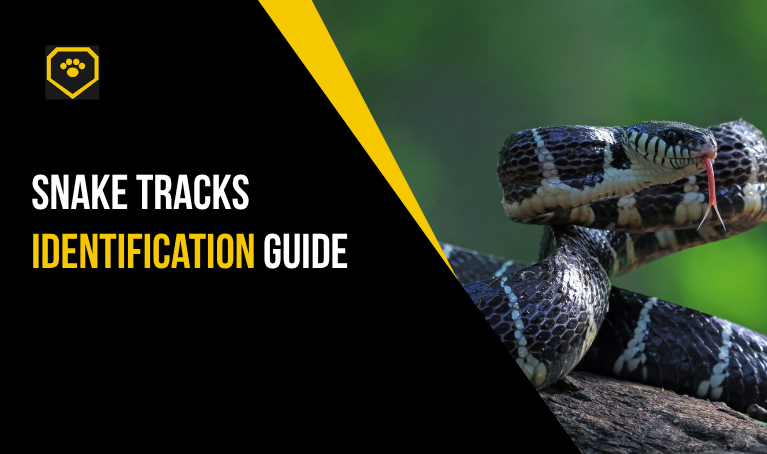
Snakes do not leave footprints, but they leave one of the most identifiable wildlife signs you will ever see in Central Florida — slither tracks. Unique to legless reptiles, snake tracks are easy to recognize once you know what to look for, and they can quickly tell you whether a snake has crossed your yard, slipped under your shed, or made its way into your garage. This guide explains exactly what snake tracks look like, where to find them in Central Florida, how to read direction and size from a track, and what to do once you confirm that snakes are using your property.
What Do Snake Tracks Look Like?
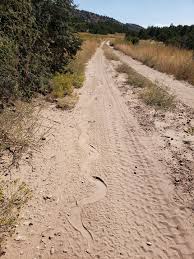
Snake tracks are most often a single, unbroken wavy or curved line dragged through dust, sand, or mud. The exact appearance depends on the surface, the speed of the snake, and the species, but a few features are consistent across virtually every snake track in Central Florida.
The Classic S-Curve Trail
The most common snake track is a smooth, sinuous trail of repeating S-curves. This pattern is created by lateral undulation, the standard movement most non-venomous and venomous snakes use. The peaks of the curves often show small mounds of pushed-aside soil where the snake gripped the ground to propel itself forward.
Width of the Trail
The width of the trail equals the diameter of the snake’s body. A pencil-thin track means a small snake — perhaps a young rat snake, a ringneck snake, or a juvenile racer. A track 1 to 2 inches wide indicates a large adult snake, such as a six-foot yellow rat snake or a cottonmouth. Tracks wider than 2 inches in Central Florida are unusual and could suggest a large constrictor.
Sidewinder and Concertina Patterns
Most Central Florida snakes use lateral undulation, but a few species employ alternate movement styles when the substrate is loose. Concertina movement leaves a series of paired arcs, used in tight quarters such as inside a shed or attic, while rectilinear movement leaves a smoother straight line, common in heavy-bodied snakes like indigos and rattlesnakes. True sidewinder patterns, with separate J-shaped marks, are very rare in Florida.
Where to Look for Snake Tracks in Central Florida
Sandy soil and frequent rain make Central Florida an ideal place to spot snake tracks. Common locations include:
- Sandy patches and bare dirt along property edges
- Mulched flower beds and the dust of pool decks
- Beach sand near the Gulf and Atlantic coasts
- Sand or dust under decks, lanais, and porch ceilings
- Garage and shed floors after a long dry spell
- Inside attics on dusty insulation, especially along the perimeter walls
- Across dirt driveways, golf course edges, and worn paths in lawns
Tracks are clearest after recent rain on sandy or muddy ground, especially in the early morning when the night’s snake activity has not yet been disturbed by sun, wind, or sprinklers.
How to Tell Snake Tracks From Other Animals
Snake vs. Lizard or Iguana Tail Drag
Lizards and iguanas often leave a thin tail drag mark, but theirs are interrupted by clear paw prints on either side. Snake tracks have no paw prints — only the smooth, continuous body line. If you see footprints alongside the drag, the animal is not a snake.
Snake vs. Rat or Mouse Tail Drag
Rats and mice often drag their tails through dust, leaving a thin straight or slightly curved line. The difference: rodent tail drags are accompanied by paired paw prints, while snake tracks stand alone. Rodent drag lines are also very narrow — usually less than 1/8 inch — while snake tracks even from small species are slightly wider with visible body imprint.
Snake vs. Worm or Slug Trail
Worms leave tiny squiggles only an inch or two long, and slugs leave a wet, glistening slime trail. Both are dramatically smaller and shorter than snake tracks, which can run several feet across an open surface in a single uninterrupted line.
Snake vs. Garden Hose or Stick Drag
It sounds obvious, but homeowners sometimes mistake the marks left by a sprinkler hose, lawn edging, or dragged tool for snake tracks. The giveaway is shape: snake tracks curve, undulate, and often change direction abruptly, while dragged objects leave straight lines or wide, uniform arcs.
How to Read Snake Tracks
You can usually read direction of travel from a snake track. The pushed-up ridges of soil along the curves are higher on the side opposite the direction of travel — the snake pressed against those points to move forward. Look for the ridges, then read the trail backward to find where the snake came from and forward to find where it is going.
If the track ends abruptly at a wall, foundation gap, garage door, or shed corner, the snake has likely entered that structure. Mark the time and location and check again the following morning to see if a fresh exit track appears.
What Snake Tracks Tell You About Activity
A single track crossing your yard usually means a snake passed through hunting for rodents, frogs, or lizards. Repeated tracks along the same path — between a wood pile and a shed, or from a foundation gap to a garage — indicate that a snake is using that route consistently and very likely sheltering nearby. Multiple tracks of different widths in the same area suggest more than one snake or a juvenile and adult both using the property.
The presence of any snake track is also a strong signal that small prey animals are abundant in the area. In Central Florida, that almost always means rats, mice, palmetto bugs, or anoles.
What to Do When You Find Snake Tracks
- Photograph the track with something for scale, ideally a coin or hand
- Note where the trail starts, where it ends, and any direction it disappears under
- Inspect garage door bottoms, foundation gaps, and weep holes for entry points
- Clear leaf litter, brush piles, and stacked wood from along the foundation
- Address any rodent problem — fewer rats and mice means fewer snakes
When to Call a Central Florida Snake Removal Specialist
Repeated snake tracks, tracks leading into structures, or tracks of unusually large width should be evaluated by a professional. Some Central Florida species are venomous, including cottonmouths, eastern diamondback rattlesnakes, pygmy rattlesnakes, and coral snakes, and identifying species from a track alone can be tricky. Central Florida Trapper provides licensed snake inspection, identification, humane removal, and habitat modification services across the Orlando metro area. If snake tracks have appeared on your property, the safest approach is a professional inspection and integrated solution.