

Rat tracks are one of the most reliable ways to confirm a rat infestation in Central Florida — and because rats are mostly nocturnal and secretive, tracks may be your first clear evidence that they are using your home, garage, attic, or shed. Roof rats and Norway rats are both established across the Orlando metro area, and each leaves distinctive prints in dust, sand, and mud. This guide walks you through what rat tracks look like, how to find them, how to tell rats from mice and squirrels, and what their presence reveals about the size and location of an infestation.
What Do Rat Tracks Look Like?
Rats have four toes on each front foot and five toes on each hind foot. Their tracks reflect this with small, precise toe prints and small pad impressions, plus a frequent tail drag down the middle of the trail.
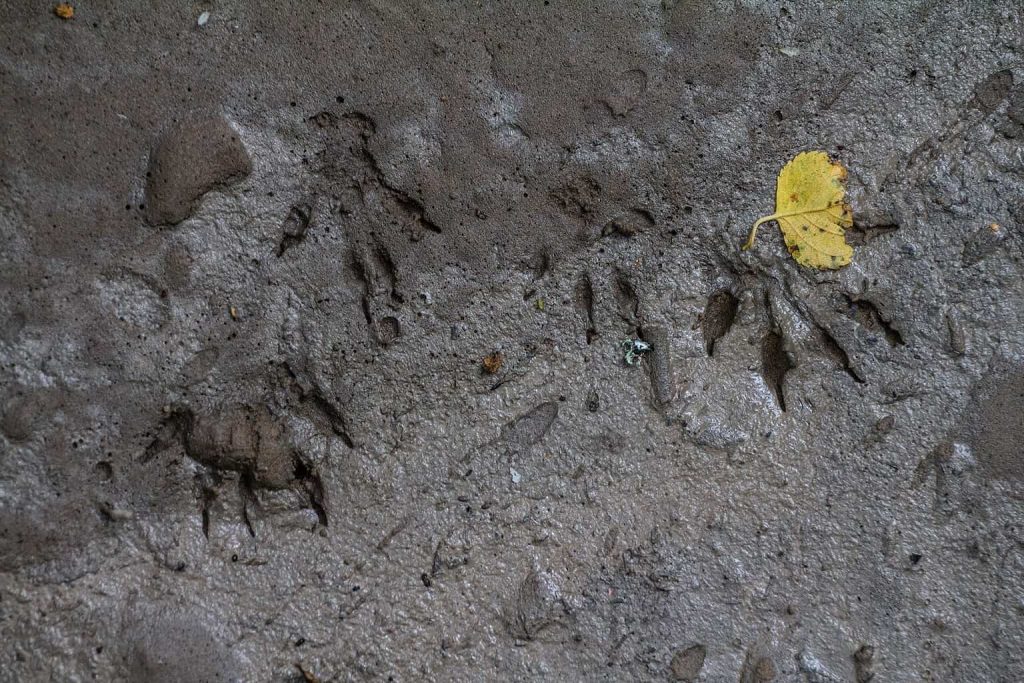
Front Paw Prints
Front prints have four slender toes radiating from a small palm pad, with a print typically 1/2 to 3/4 inch long. Toes are narrow and finger-like, and small claw marks are often visible at the toe tips.
Hind Paw Prints
Hind prints have five toes — the inner fifth toe is shorter and often less distinct — and are slightly larger than fronts, typically 3/4 to 1 inch long. The hind print is elongated, with a narrow heel pad behind the toes.
Tail Drag
Rats drag their long, naked tails as they walk, leaving a thin, faint line down the middle of the trail between paw prints. This tail drag is one of the most reliable features distinguishing rat tracks from squirrels, which rarely drag their tails.
Stride and Pattern
Rats alternate steps when walking, leaving paired prints in a steady line. Stride between paired prints is typically 1.5 to 3 inches. When running, rats produce more spread-out tracks with longer stride. Norway rats tend to leave slightly larger tracks with longer stride than roof rats.
Where to Find Rat Tracks in Central Florida
- Dust on attic insulation, especially along beams, soffit edges, and gable corners
- Dust along garage walls and behind shelving
- Light dust on pool equipment closet floors and lanai storage shelves
- Wet sand or mud near foundation gaps, AC pads, and dryer vents
- Pantry or cabinet floors, especially behind appliances and inside drawers
- Pollen-coated patios and lanais during oak pollen season
- Sand or dust on top of fence boards and pergola crossbeams
Tracks are usually freshest in the morning, before sunlight, sprinklers, and foot traffic disturb them.
How to Tell Rat Tracks From Other Animals
Rat vs. Mouse Tracks
Mouse tracks follow the same general shape as rat tracks but are dramatically smaller — usually under 3/8 inch long. The tail drag is also thinner and lighter. If the print and tail drag fit comfortably under a fingertip, it is mouse, not rat.
Rat vs. Squirrel Tracks
Squirrels bound rather than walk, leaving a boxy four-print pattern with two larger hind prints in front of two smaller fronts. Rats walk and leave paired side-by-side prints in a steady line with a tail drag. Squirrels also rarely leave tail drag marks. This combination usually makes identification straightforward.
Rat vs. Cat or Small Dog Tracks
Cats and dogs have only four toes per foot and round, padded prints. They never leave a tail drag. The presence of a five-toed hind print combined with a tail drag rules out cats and dogs immediately.
Rat vs. Opossum Tracks
Opossums also leave five-toed hind prints, but the opossum hind print has a clear opposable inner toe that sticks out at an angle, and opossum prints are dramatically larger than rat prints. Opossums also produce only inconsistent tail drags compared to the steady drag rats leave.
What Rat Tracks Tell You About Activity
A single set of tracks crossing a dusty surface usually means a rat passed through. Repeated tracks along the same path, especially along a wall edge, baseboard, or beam, indicate an active rat travel route. Rats use the same paths repeatedly, often hugging walls and beams because their poor vision relies on whisker contact with surfaces. Worn or shiny “rub marks” along these routes are a strong indicator of long-term activity.
Tracks leading directly to a hole in the soffit, drywall, or foundation reveal an entry point. Tracks concentrated in one part of the attic with droppings nearby indicate a nest in that area.
Other Companion Signs to Confirm Rat Activity
- Gnaw marks on wood, plastic, or wiring insulation
- Dark grease smudges on baseboards and beams from oily fur
- Shredded insulation, paper, or fabric in attic corners
- Sour, musky smell in enclosed spaces
- Scratching and pitter-patter sounds at night
- Pet food disappearing overnight
What to Do When You Find Rat Tracks
- Photograph the tracks with something for scale, ideally a coin
- Trace the trail back toward the entry point or nest
- Inspect the exterior for gaps larger than 1/2 inch — common entry sizes for rats
- Secure pet food, fix water leaks, and remove yard debris that harbors rats
- Trim tree limbs and palm fronds at least 8 to 10 feet back from the roof line
Why DIY Trapping Often Fails
Rats are smart, fast-breeding, and quick to learn from danger. Snap traps and store-bought baits often catch a few rats but leave the breeding population intact, and poison baits create a serious risk of dead rats decomposing in walls and attic spaces. Effective rat control requires identifying every entry point, sealing the structure, and combining mechanical removal with environmental changes to prevent return.
When to Call a Central Florida Rat Removal Specialist
Rat tracks usually indicate an established infestation that will worsen quickly. Central Florida Trapper offers licensed rat inspection, trapping, exclusion, sanitation, and attic decontamination across the Orlando metro area. We identify entry points invisible from the ground, seal them with materials rats cannot chew through, and provide ongoing monitoring to make sure the problem does not return.