Opossum tracks are some of the most distinctive in Central Florida wildlife. The Virginia opossum is the only marsupial native to North America, and its hind feet leave a print unlike any other animal you will find in Orlando-area yards. Once you know what to look for, opossum tracks are easy to identify and can quickly tell you whether the small mammal raiding your trash, sleeping under your deck, or wandering across your lanai at night is an opossum or one of several look-alike species. This guide walks you through opossum tracks, where to find them, and what they reveal about activity around your home.
What Do Opossum Tracks Look Like?
Opossums are flat-footed walkers with five toes on every foot — and the hind foot has a true opposable inner toe, almost like a thumb. That single feature is what makes opossum tracks unmistakable.
Front Paw Prints
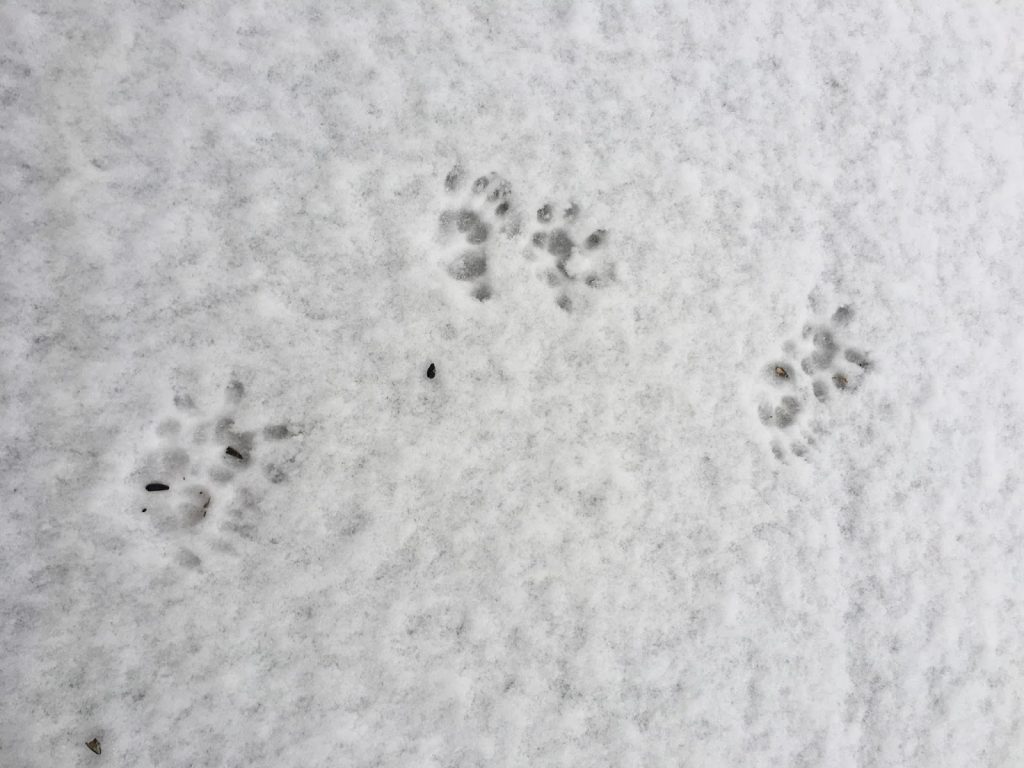
Front paws have five toes radiating in a star pattern from a small, roughly circular palm pad. Toes are long and slender, finger-like in appearance, and may show small claw marks. Front prints typically measure 1.5 to 2 inches in both length and width. Because the toes spread widely, the overall shape looks like a tiny human hand with the thumb removed.
Hind Paw Prints — The Diagnostic Feature
The hind paw is the diagnostic. Like the front, it has five toes — but the inner toe (the hallux) is opposable and sticks out at a sharp angle, almost 90 degrees from the rest. The result looks like a clenched human hand with the thumb sticking out to the side. No other animal in Central Florida leaves a print like this. Hind prints typically measure 2 to 2.5 inches long.
Tail Drag
Opossums sometimes drag their long, hairless prehensile tail, leaving an inconsistent thin line down the center of the trail. The tail drag is not as continuous or pronounced as the armadillo’s, but on soft mud or sand, you may see it.
Stride and Pattern
Opossums walk slowly with the front and hind paws on the same side moving together (a pacing gait). Stride between paired prints is usually 6 to 12 inches, slower and shorter than a raccoon’s stride. The hind paw often lands just behind, on top of, or slightly to the side of the front paw print on the same side.
Where to Find Opossum Tracks in Central Florida
Opossums travel widely across Central Florida and leave tracks in many of the same surfaces raccoons use:
- Mud or wet sand near retention ponds, ditches, and pool decks
- Sandy yards, mulched flower beds, and freshly turned garden soil
- Pollen-coated patios, lanais, and screen porches in oak pollen season
- Dust on attic insulation if the opossum has entered the home
- Around trash cans, pet feeding areas, and bird feeders
- Under decks, sheds, and porches where opossums shelter
Because opossums are nocturnal, the best time to find fresh tracks is in the early morning before lawn activity disturbs them.
How to Tell Opossum Tracks From Other Animals
Opossum vs. Raccoon Tracks
Raccoon hind prints have all five toes pointing roughly forward in a long, human-foot-shaped track. Opossum hind prints have an opposable thumb-like toe sticking out to the side. This single difference is essentially foolproof.
Opossum vs. Squirrel or Rat Tracks
Squirrels and rats also leave five-toed hind prints, but their tracks are dramatically smaller, more elongated, and lack the opposable thumb. Squirrels also leave a bounding boxy four-print pattern, while opossums leave paired side-by-side prints from a slow walking gait.
Opossum vs. Cat or Small Dog
Cats and dogs have only four toes per foot. The presence of a clear fifth toe — let alone a thumb-like one — immediately rules out canines and felines.
Opossum vs. Armadillo Tracks
Armadillo prints show only two or three pronounced clawed toes and almost always include a steady tail drag down the center of the trail. Opossum prints are more hand-like with a clear thumb on the hind foot and only an inconsistent tail drag.
What Opossum Tracks Tell You About Activity
A single set of tracks crossing the yard usually means an opossum passed through during the night. Repeated tracks along the same path — particularly between a tree, fence, or garbage can and a denning spot under your deck or shed — indicate that an opossum has incorporated your property into its routine. Tracks leading to a soffit, fascia gap, or attic vent suggest the opossum may have entered the structure, although opossums enter attics far less often than raccoons or rats.
What to Do When You Find Opossum Tracks
- Photograph the prints with a coin or hand for scale
- Trace the line of travel back to identify the den or food source
- Move pet food and water indoors after sunset
- Secure trash cans with locking lids or store them inside the garage
- Install hardware cloth skirting around decks, sheds, and porches
When to Call a Central Florida Opossum Removal Specialist
Tracks plus visible droppings, repeated trash raids, or sightings of a denning opossum under your deck call for a professional response. Central Florida Trapper provides licensed opossum trapping, humane removal, exclusion, and sanitation across the Orlando metro area. A professional inspection identifies den and entry sites, removes the animal humanely, and seals the structure so the same situation does not recur.