

Mouse tracks are tiny and easy to overlook, but they are often the first physical evidence that a mouse has begun using your Central Florida home as shelter. Spotting their delicate prints in dust, pollen, or sand around your kitchen, garage, pantry, or attic gives you a critical early warning before the infestation grows out of control. This guide walks you through exactly what mouse tracks look like, where to find them, how to distinguish mouse prints from rats and other small animals, and what to do once you confirm a mouse on your property.
What Do Mouse Tracks Look Like?
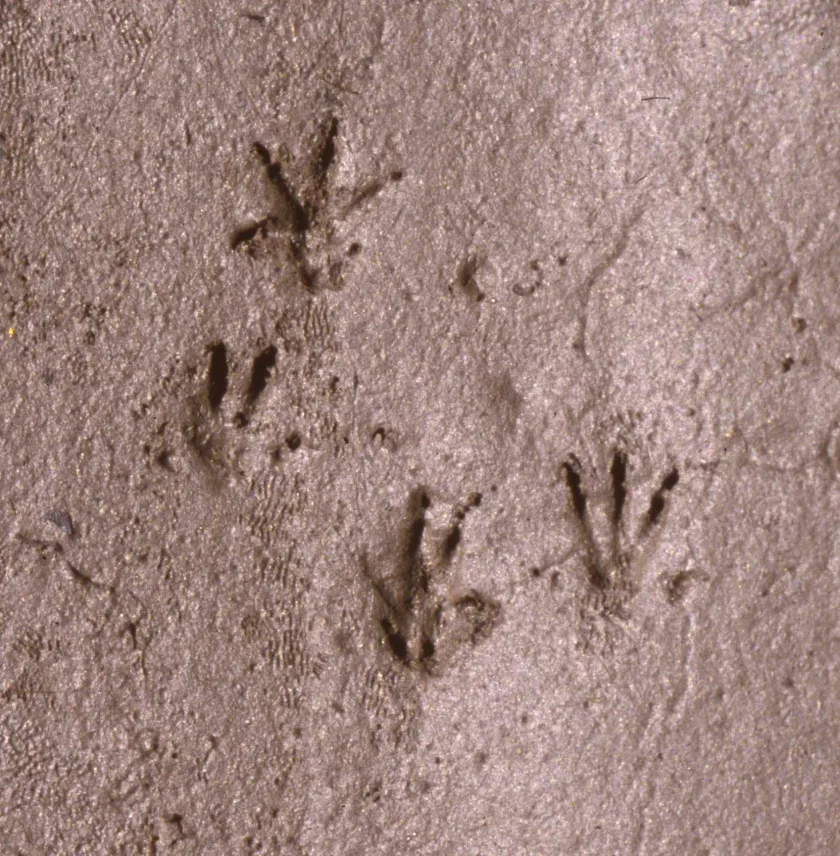
Mice have four toes on the front feet and five toes on the hind feet, the same toe pattern as rats but in a dramatically smaller print. Their tracks are precise, light, and easy to miss without good light. Once you know the size and shape, however, they become unmistakable.
Front Paw Prints
Front prints have four slender toes and a small palm pad, with the entire print typically only 1/4 to 3/8 inch long. Toes are narrow and finger-like. Claw marks are faint but often visible at the toe tips on dusty surfaces.
Hind Paw Prints
Hind prints have five toes, with the inner fifth toe smaller and sometimes faint. The hind print is slightly longer than the front — about 3/8 to 1/2 inch long — and has an elongated, narrow heel pad.
Tail Drag
Mice drag their thin tails as they walk, leaving an extremely fine line between the paw prints. The tail drag is thinner and lighter than a rat’s tail drag, and on very fine dust it can look almost like a single hair has been dragged through.
Stride and Pattern
Mice alternate steps when walking, leaving paired side-by-side prints in a steady line. Stride between paired prints is typically 1 to 2 inches. When running, mice stretch out more, but they still produce delicate, precise prints with that signature thin tail drag down the middle.
Where to Find Mouse Tracks in Central Florida
- Inside pantry shelves and along the back of kitchen cabinets
- Inside silverware drawers, utility drawers, and stored cookware
- Behind refrigerators, stoves, and dishwashers (especially on the floor)
- Garage shelves, tool drawers, and stored boxes covered in light dust
- Attic insulation along beams, soffit corners, and gable ends
- Pollen-coated patios, lanais, and screen porches during oak pollen season
- Inside utility closets, water heater enclosures, and electrical panels
Sprinkling a thin layer of flour or talcum powder along suspected mouse travel routes is a classic way to capture clear tracks overnight. The next morning, you can read the trails and confirm whether mice are using the area.
How to Tell Mouse Tracks From Other Animals
Mouse vs. Rat Tracks
Rat tracks are dramatically larger — typically 1/2 to 1 inch long versus the mouse’s 3/8 inch maximum — and the tail drag is much wider. If a print and tail drag fit comfortably under a fingertip, you are looking at mouse tracks; if not, they are rat.
Mouse vs. Lizard Tracks
Small lizards (anoles, geckos) also leave tracks with tail drag, but their toes are visibly clawed, spread out wider, and the tail drag is heavier relative to print size. Lizards also tend to run, freeze, and run again, producing a more irregular pattern than the steady mouse walking line.
Mouse vs. Insect Tracks
Large insects (palmetto bugs, beetles) sometimes leave faint tracks in flour or dust, but these consist of six small dot marks with no tail drag at all. The presence of a continuous tail drag essentially rules out insects.
Mouse vs. Small Bird Tracks
Small birds leave three-toed, arrow-shaped prints without a tail drag. Mice never produce arrow-shaped prints. Birds also hop, producing paired side-by-side prints rather than alternating steps.
What Mouse Tracks Tell You About Activity
A single trail of mouse tracks usually indicates an active mouse, since mice tend to use the same paths repeatedly. Repeated tracks along a baseboard, beam, or pantry shelf reveal a travel route that mice are using nightly. Tracks leading directly to a hole, gap, or chewed opening confirm an entry point and likely nesting area.
Multiple sets of tracks of different sizes suggest a breeding population — adult and juvenile mice — which usually indicates the infestation has been present for several weeks at minimum. The faster you respond, the easier the situation is to control.
Companion Signs to Confirm Mouse Activity
- Rice-grain-sized dark droppings along the same paths as the tracks
- Gnaw marks on food packaging, plastic, or wood trim
- Greasy or smudgy marks on baseboards from oily fur
- Shredded paper, fabric, or insulation in cabinets and corners
- Faint pitter-patter sounds inside walls or ceilings at night
- Musty smell in cabinets, drawers, or pantries
What to Do When You Find Mouse Tracks
- Photograph the tracks with something for scale, ideally a coin
- Trace the trail back to identify the entry point or nesting area
- Inspect for openings as small as 1/4 inch — mice squeeze through dime-sized gaps
- Seal openings temporarily with steel wool, hardware cloth, or copper mesh
- Store dry goods in airtight containers and remove pet food at night
- Fix water leaks that provide mice with drinking water
Why Mouse Tracks Demand Quick Action
Mice mature in about 6 weeks and can produce a new litter every 3 to 4 weeks year-round in Central Florida’s warm climate. A handful of tracks today can become an established colony by next month if no action is taken. Each new mouse multiplies the contamination, gnawing damage, and risk of disease transmission.
When to Call a Central Florida Mouse Removal Specialist
If mouse tracks have appeared in your home, the most effective response is a professional inspection and exclusion plan. Central Florida Trapper offers licensed mouse inspection, trapping, exclusion, sanitation, and attic decontamination across the Orlando metro area. We identify every gap mice can use — many of them invisible to the untrained eye — and seal them with materials mice cannot chew through. Quick action turns a tiny problem into a small fix; delay turns it into a full home infestation.