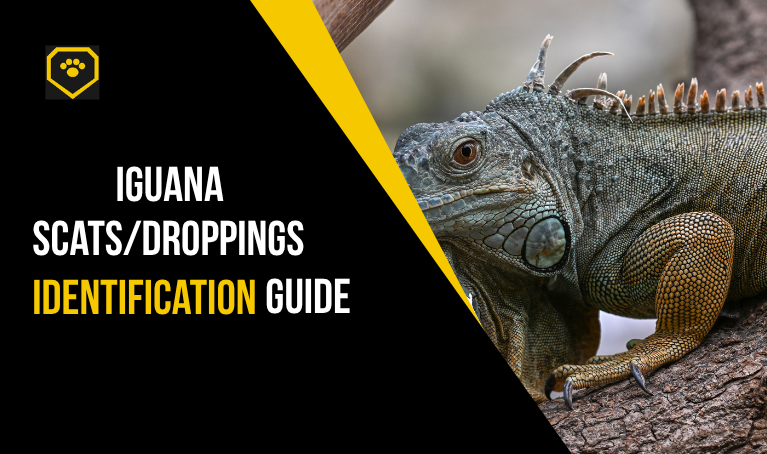
Green iguanas have become one of Central Florida’s most problematic invasive species, and the first sign of an iguana on your property is almost always its droppings. These large, smelly, two-tone deposits show up on pool decks, lanais, seawalls, dock pilings, and waterfront landscaping across the Orlando area and southward through every Florida coastal community. Identifying iguana scat is critical — it confirms a non-native species that damages landscaping, contaminates water, and can cause structural damage by burrowing into seawalls and foundations. This guide explains what iguana droppings look like, where to find them, how they differ from other reptiles, and what to do once you confirm them.
What Do Iguana Droppings Look Like?
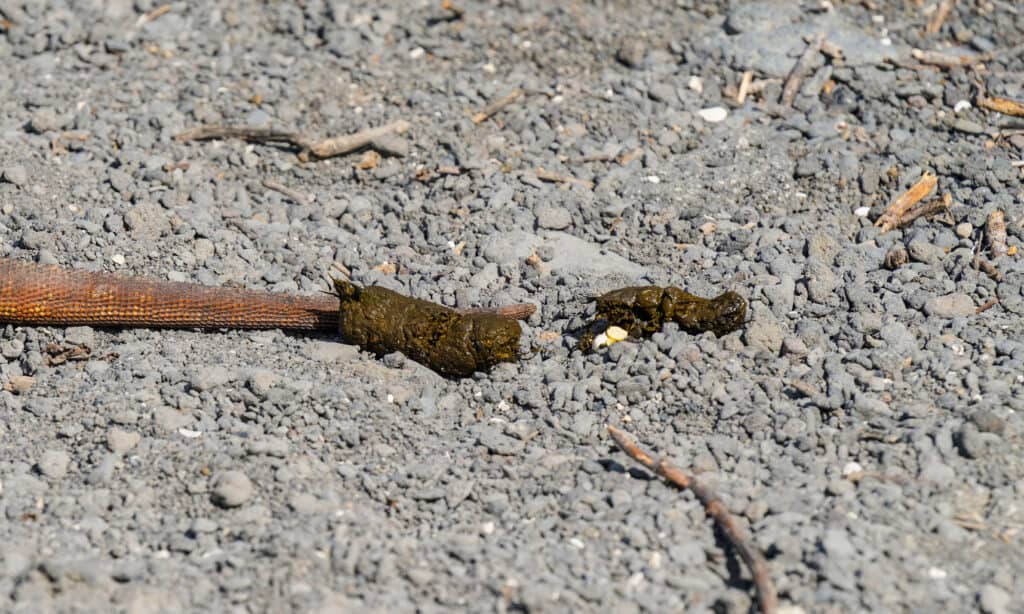
Iguana droppings are unusually large for a reptile, often shocking homeowners who expect lizard scat to be small. A full-grown green iguana — sometimes weighing over 15 pounds and reaching 6 feet long including tail — produces droppings closer in size to those of a medium dog than a typical lizard.
Size and Shape
Adult iguana droppings are typically 2 to 6 inches long and 1/2 to 1 inch thick, tubular in shape with a chalky white urate cap on one end. Juvenile droppings are proportionally smaller — sometimes only an inch long — but follow the same shape. The white urate cap is one of the most diagnostic features.
Color and Contents
The dark portion is usually dark brown to black, sometimes greenish from the plant-heavy diet that green iguanas favor. Hibiscus, bougainvillea, croton, citrus, and many ornamental plants are favorite foods, so fragments of leaves, flower petals, and fruit may be visible. The white urate cap is firm, chalky, and clearly demarcated from the fecal portion.
Smell
Iguana droppings have a strong, sour, almost vegetal odor that intensifies in Central Florida heat. Concentrations on pool decks or near water can become particularly offensive.
Where You’ll Find Iguana Droppings in Central Florida
Iguanas favor warm, sunny basking spots and almost always defecate near them. Common locations include:
- Pool decks, especially around screen cages and patios
- Seawalls, docks, and boat lifts along canals and lakes
- Concrete walkways, driveways, and pool steps
- Lanai floors and porch decks adjacent to landscaping
- Roofs, particularly Spanish tile, where iguanas bask
- Beneath palm trees, oaks, and ornamental landscaping
- Inside pools — iguanas frequently relieve themselves while swimming
Droppings inside swimming pools are one of the most common and frustrating signs of an iguana problem in Central and South Florida. Iguanas swim well and often use pools as a thermoregulation tool, leaving droppings that contaminate the water and may require shock-chlorination treatments.
How to Tell Iguana Droppings From Other Reptiles
Iguana vs. Snake Droppings
Both produce droppings with a white urate component, but iguana droppings are much larger and more clearly two-tone, with the white cap as a distinct end piece rather than smeared throughout. Snake droppings are usually more twisted and often contain fur, scales, or bones from rodent prey. Iguana droppings contain plant material.
Iguana vs. Small Lizard Droppings
Anoles, geckos, and other small lizards leave miniature versions of iguana droppings — sometimes only 1/4 inch long. The two-tone shape is identical, but size narrows it down quickly. Anything over an inch long is far more likely from an iguana.
Iguana vs. Mammal Droppings
The chalky white urate cap is essentially conclusive evidence of a reptile or bird. Mammals do not produce urates, so raccoon, opossum, dog, and rat droppings can be ruled out immediately when a clear white cap is present.
Iguana vs. Bird Droppings
Bird droppings are wetter, more splat-shaped, and have the white urate intermixed with the dark portion. Iguana droppings hold a tubular shape with the urate clearly capped on the end, much like a piece of toothpaste with a white tip.
What Iguana Droppings Tell You About Activity
A single dropping near your pool or seawall usually indicates one visiting iguana, but iguanas are territorial and tend to return to the same basking spots day after day. Repeated droppings in the same location, especially several deposits on the same pool deck or seawall, strongly indicate a resident or regular visitor. Multiple sizes of droppings suggest both adult and juvenile iguanas, often pointing to a nearby breeding population.
Other supporting signs include chewed plants (especially hibiscus, bougainvillea, and citrus leaves), large lizards spotted on roofs or seawalls, and burrows in soft soil near water that can undermine seawalls, sidewalks, and pool decks.
Health Risks of Iguana Droppings
Iguana droppings carry salmonella, the same bacterial concern present in most reptile fecal matter. Risk increases when droppings contaminate swimming pools, splash pads, or surfaces children and pets touch. The combination of acid and bacteria can also damage finishes on concrete pool decks, painted seawalls, and tile roofs. Always wear gloves when cleaning iguana droppings, and disinfect surfaces with a 10 percent bleach solution.
What to Do When You Find Iguana Droppings
- Photograph droppings and note the location pattern over several days
- Look for live iguanas on roofs, seawalls, fences, and tree branches in the morning
- Inspect landscaping for chewed leaves, flowers, and bark damage
- Check seawalls and pool decks for burrow openings near the waterline
- Remove favorite food plants or protect them with mesh cages
- Trim tree limbs and palm fronds away from the roof to limit access
Why Iguanas Are a Major Florida Problem
Green iguanas are non-native invasive reptiles in Florida and are not protected by anti-cruelty laws beyond basic humane handling. The Florida Fish and Wildlife Conservation Commission encourages removal because of their environmental and structural damage. Populations have expanded northward over the past two decades and now appear regularly across Central Florida, particularly near canals, lakes, and warm urban environments. A single female iguana can lay 20 to 70 eggs per clutch, so unchecked populations grow quickly.
When to Call a Central Florida Iguana Removal Specialist
Repeated iguana droppings, visible iguanas on your property, or burrow damage along seawalls and pool decks all call for professional intervention. Central Florida Trapper provides licensed iguana removal, burrow exclusion, landscape protection, and sanitation services across the Orlando metro area and waterfront communities. Removal is regulated under Florida invasive species rules, and a licensed professional ensures the work is humane, safe, and effective.