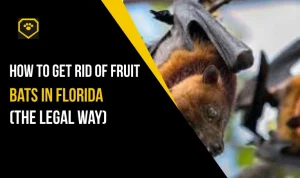
If you have noticed small dark pellets piling up on your attic floor, in your soffit voids, or directly beneath an exterior wall, you may be dealing with bat guano — and in Central Florida that almost always means an active bat colony is roosting in your home. Bat droppings are one of the most distinctive wildlife signs to identify, but they also pose serious health risks and require professional handling. This guide walks you through exactly what bat guano looks like, where to find it in Central Florida structures, how to tell guano from rat or mouse droppings, the disease risks involved, and what to do once you confirm a bat infestation.
What Does Bat Guano Look Like?
Bat guano is small, dark, and dry, but it has one very specific feature that sets it apart from every other wildlife dropping in Central Florida: when crushed, it crumbles into a powder full of shiny insect parts. This is because bats eat almost exclusively flying insects, and the indigestible exoskeletons pass through their digestive systems intact.
Size and Shape
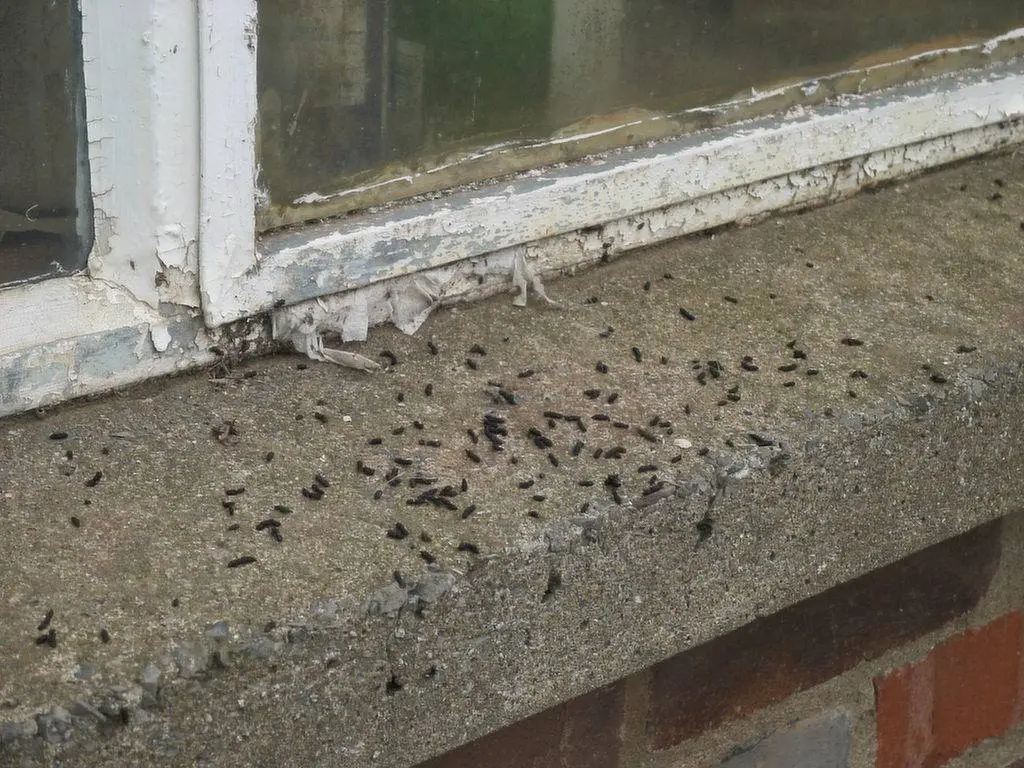
Individual pellets are typically 1/4 to 1/2 inch long and roughly 1/8 inch in diameter. They are oblong, slightly curved, and have rounded ends. Many people initially mistake them for mouse droppings because the size is similar.
Color and Texture
Fresh guano is dark brown to black with a slightly moist surface, but it dries quickly in Central Florida’s heat and becomes brittle within a day or two. Older guano fades to a dusty gray-brown and can collapse into powder if disturbed. Crush a pellet between two pieces of paper and you should see tiny iridescent fragments — wing scales, leg pieces, and beetle shells.
How Guano Accumulates
Bats roost in the same spot every day, often in groups of dozens to hundreds, so guano builds up directly beneath the roost in piles or cones. A single Mexican free-tailed bat or evening bat — the two most common attic species in Central Florida — can produce 30 to 60 pellets per day. A colony of 50 bats can deposit several pounds of guano per month.
Where You’ll Find Bat Guano in Central Florida
Bats squeeze through gaps as small as 3/8 inch, so they can roost almost anywhere. Common Central Florida roost sites include:
- Attic peaks, ridge boards, and gable ends
- Behind fascia boards and inside soffit voids
- Under roof tiles, especially older barrel tile and Spanish tile
- Inside wall cavities accessible through fascia gaps
- Under porch ceilings, lanai overhangs, and pool-cage gables
- Inside chimneys, around chimney caps, and in flue voids
If you are seeing piles of dark pellets directly beneath an exterior wall on your driveway, lanai, or sidewalk, look up — there is almost certainly a roosting bat above that spot.
How to Tell Bat Guano From Other Droppings
Bat Guano vs. Mouse Droppings
Mouse droppings are similar in size and shape but firm and uniform throughout. They do not crumble into shiny powder when crushed — they break into solid pieces. If a dark pellet collapses to dust full of insect fragments, it is bat guano, not mouse.
Bat Guano vs. Rat Droppings
Rat droppings are larger (about 1/2 to 3/4 inch), pointed at one or both ends, and often scattered along walls and travel paths. Bat guano accumulates in tight piles directly beneath a roost.
Bat Guano vs. Cockroach Droppings
Large palmetto bug droppings are sometimes confused with bat guano, but cockroach droppings are smaller (around 1/16 inch), more cylindrical, and have ridges along the length. They also lack the shiny insect fragments visible inside guano.
Health Risks of Bat Guano
Bat guano poses two significant health risks that everyone in Central Florida should be aware of before approaching a roost.
Histoplasmosis
The most serious risk is histoplasmosis, a respiratory disease caused by inhaling spores of the fungus Histoplasma capsulatum, which grows in soils and accumulations contaminated by bat or bird droppings. Disturbing guano — sweeping, vacuuming, or crushing it — releases spores into the air and can cause flu-like respiratory illness, lung damage, and in severe cases life-threatening systemic infection. Children, the elderly, and the immunocompromised are at greatest risk.
Rabies and Bat Bites
Florida bats can carry rabies, and any direct contact with a bat — even a small scratch you do not feel — must be reported to a doctor. Guano itself does not transmit rabies, but live or recently dead bats encountered during cleanup absolutely can.
Why You Cannot Just Remove Bats Yourself in Florida
All Florida bat species are protected by state law. The Florida Fish and Wildlife Conservation Commission prohibits killing, harming, or sealing bats inside structures during maternity season, which runs from April 16 to August 14 each year. During this window, only one-way exclusion devices installed by trained professionals can legally be used, and only after maternity season ends.
This makes professional bat removal essential. Improper exclusion can leave dependent pups trapped inside walls, where they will die and decompose, creating odor and secondary pest problems for months.
How to Safely Approach Suspected Bat Guano
- Do not sweep, vacuum, or pressure-wash any pile of suspected guano
- Take a photograph and note the location and approximate quantity
- Avoid disturbing the area until a licensed professional inspects it
- Keep pets and children away from the area
- Wear an N95 respirator and gloves if you must approach for inspection
What Bat Guano Tells You About the Colony
The size and freshness of the guano pile gives you a quick read on the colony. A small, scattered handful of pellets may indicate one or two transient bats. A cone-shaped pile several inches tall, with fresh moist pellets on top, points to an established maternity colony of dozens of bats. Streaks of brown staining on the exterior wall above the pile — caused by bats sliding in and out of a small opening — confirm the entry point.
When to Call a Central Florida Bat Removal Specialist
If you have found bat guano anywhere on or in your home, the only safe and legal route is to bring in a licensed Central Florida wildlife professional. Central Florida Trapper specializes in humane bat exclusion, attic decontamination, and full-home sealing across Orlando, Winter Park, Sanford, and surrounding communities. We follow Florida Fish and Wildlife guidelines, including maternity season restrictions, to ensure every bat is excluded humanely and your home is sealed permanently against future colonies.