Snake droppings are one of the more confusing wildlife signs Central Florida homeowners run into, partly because snakes defecate far less often than mammals and partly because their droppings can look very different depending on what the snake recently ate. Whether you have spotted a strange dark deposit on your lanai, garage floor, or shed, identifying snake scat correctly can confirm whether a snake is using your property as a hunting ground or shelter. This guide explains exactly what snake droppings look like, where to find them in Central Florida, how to tell snake scat from bird and lizard droppings, and what to do once you confirm them.
What Does Snake Scat Look Like?
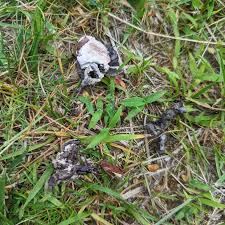
Snake droppings have one feature that immediately sets them apart from almost every other Central Florida animal — they include both feces and urates, the chalky white waste that snakes excrete instead of liquid urine. The combination of dark feces and pasty white urate gives snake scat a very distinctive two-tone appearance.
Size and Shape
Snake droppings are usually long, tubular, and slightly twisted. Size scales directly with the snake — a small ringneck snake leaves deposits the size of a pencil eraser, while a six-foot Eastern rat snake or yellow rat snake (very common in Central Florida attics) leaves droppings several inches long and a half inch thick. Larger species like Burmese pythons leave droppings that look almost like small dog feces, but those are mostly limited to South Florida.
Color and Components
The dark portion is brown to black and may contain visible fur, feathers, scales, or small bones — clear evidence that the deposit came from a meat-eating animal. The white portion is the urate cap, which can be smeared on top of the feces, mixed throughout the dropping, or deposited as a separate streak nearby. The presence of that chalky white is the single best clue that you are looking at scat from a snake or other reptile rather than from a mammal.
Smell and Texture
Snake droppings have a strong, sharp, sometimes ammonia-like odor, especially when fresh. Texture is moist and pasty when fresh, drying within a day or two in Central Florida heat to a brittle, crumbly state. Older droppings often look like a dark twist topped or wrapped in white paste.
Where You’ll Find Snake Scat in Central Florida
Snakes deposit droppings near where they shelter, basking spots, and along travel routes. Common Central Florida locations include:
- Garage floors, especially in dim corners and behind boxes
- Sheds, pool equipment closets, and storage rooms
- Inside attics, especially on or near insulation along the wall edges
- Lanai floors, screen porch corners, and pool deck edges
- Beneath outdoor stairs, decks, AC pads, and stacked landscape pavers
- Along the foundation, particularly near gaps that allow access
Snakes do not visit a “bathroom” the way raccoons do — droppings show up wherever the snake happens to be, often near a recent meal site or shed skin.
How to Tell Snake Scat From Other Animals
Snake vs. Bird Droppings
Bird droppings also contain that characteristic white urate cap, which is the most common source of confusion. The differences: bird droppings tend to be smaller, more splattered or splat-shaped, and the white portion is usually thinner and more liquid-looking than the thick chalky urate snakes produce. Bird droppings are also more likely to appear on top of railings, vehicles, and outdoor furniture, while snake droppings appear on the ground or in enclosed spaces.
Snake vs. Lizard or Iguana Droppings
Iguanas, anoles, and other Florida lizards also produce a feces-plus-urate combination, but their droppings tend to be more uniform in color, with the urate as a distinct white tip rather than a wrap or smear. Iguana droppings are noticeably larger — a fully grown green iguana leaves dog-like piles topped with chalky white. Smaller lizard droppings look like miniature snake droppings but are usually only the size of a grain of rice.
Snake vs. Mammal Droppings
Mammals do not produce urates. Any dropping with a clearly chalky white component is reptilian or avian, never raccoon, opossum, rat, mouse, squirrel, or bat. This is the easiest way to rule out most home-invading mammals.
What Snake Scat Tells You About Activity
A single dropping in your garage may simply mean a snake passed through hunting for rodents. Multiple droppings in the same general area, especially combined with a shed snake skin, usually indicate that a snake has been sheltering on or near your property for an extended period. Repeated droppings in an attic strongly suggest a yellow rat snake or eastern rat snake using the attic to hunt rats — which itself is a sign of a rodent problem feeding the snake.
The size of the dropping also tells you the approximate size of the snake. Pencil-eraser size means a small species or juvenile; thick, finger-length droppings indicate an adult rat snake or larger.
Health Risks of Snake Droppings
Snake droppings can carry salmonella, the same bacteria found in many reptile fecal matter. Cross-contamination through cleaning surfaces, food prep areas, or pet bowls is the main risk. Always wear gloves when cleaning suspected snake droppings, disinfect the surface with a 10 percent bleach solution, and wash your hands thoroughly afterward.
What to Do When You Find Snake Scat
- Photograph the dropping with something for scale
- Look for additional signs: shed snake skin, rodent droppings, or live snake sightings
- Inspect garage, shed, attic, and crawl space corners for shelter spots
- Seal gaps in foundation, garage door bottoms, and exterior walls larger than 1/4 inch
- Address any rodent problem on the property — rats and mice are the main snake attractant
Common Central Florida Snakes That Leave Droppings in Homes
Most snake droppings found inside Central Florida structures come from harmless species, including the yellow rat snake, eastern rat snake, gray rat snake, eastern racer, southern black racer, and various water snakes. Venomous species such as cottonmouths, eastern diamondback rattlesnakes, and pygmy rattlesnakes occasionally show up in yards and outbuildings but only rarely leave droppings inside structures.
When to Call a Central Florida Snake Removal Specialist
Even non-venomous snakes can be unsettling and may be a symptom of a larger rodent issue. Central Florida Trapper provides licensed snake removal, inspection, and integrated rodent management across the Orlando metro area. We identify species, locate shelter spots, and address the underlying conditions that attract snakes to your property — which usually means dealing with rats and mice first. If you are finding snake droppings or shed skins around your home, contact us for a thorough assessment.