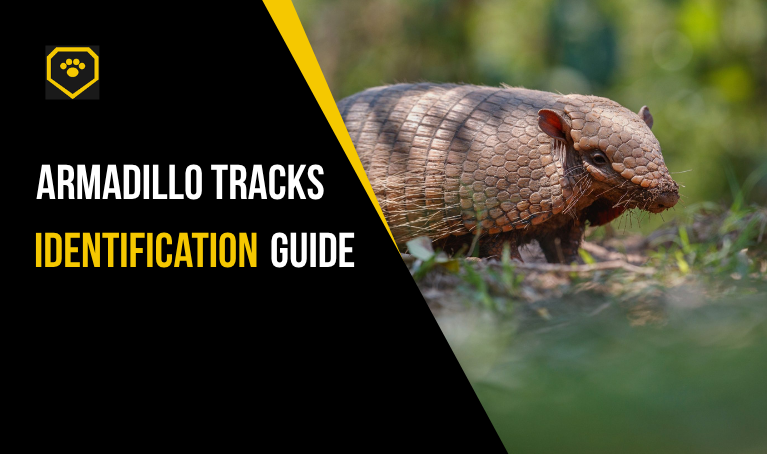
Armadillos may be one of the strangest-looking mammals in Central Florida, and their tracks are equally distinctive. If you have noticed unusual three-toed prints in mud, sand, or freshly turned mulch around your home, you very likely have an armadillo on your property. Armadillo tracks reveal a great deal about their habits — where they enter your yard, where they shelter, and how often they visit. This guide explains exactly what armadillo tracks look like, where to find them in Central Florida, how to tell them apart from similar species, and what to do once you confirm armadillo activity.
What Do Armadillo Tracks Look Like?
The nine-banded armadillo, the only armadillo species established in Florida, has very specialized feet built for digging. The tracks reflect that — heavily clawed, narrow, and with fewer toes visible than most local mammals.
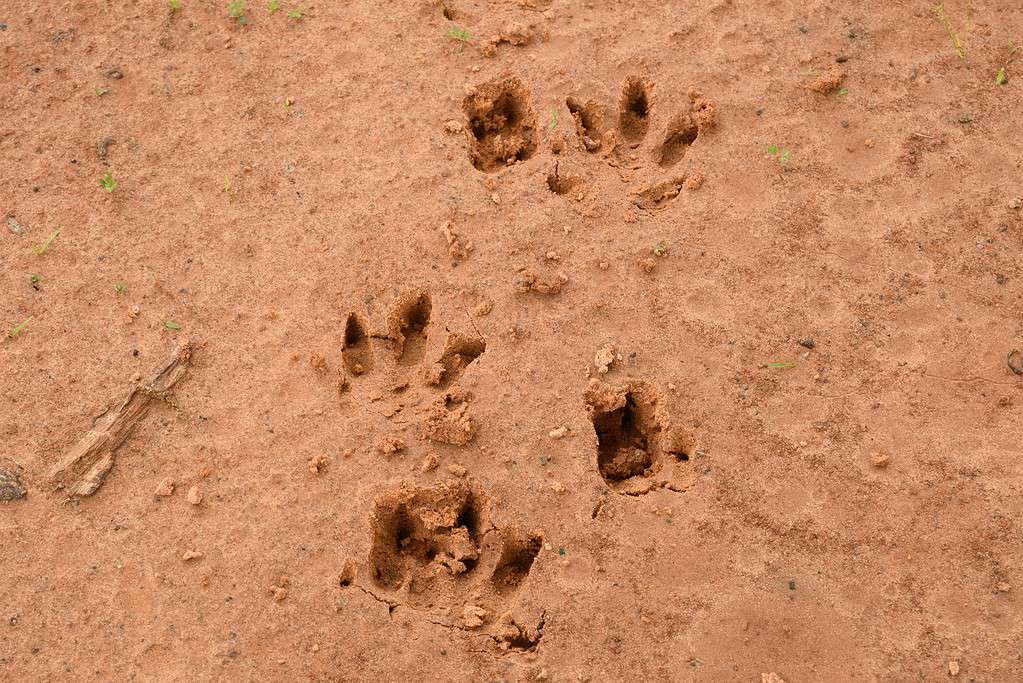
Front Paw Prints
Armadillo front paws have four toes, but only the central two or three usually leave clear marks. The toes are tipped with strong, curved claws that often appear as deep punch marks ahead of the foot pad. Front prints are typically 1.5 to 2 inches long, narrow, and almost bird-like in appearance because of the prominent claw marks.
Hind Paw Prints
Hind paws have five toes, with the middle three most prominent. The hind print is slightly longer than the front — usually 2 to 2.5 inches long — and shows a small heel pad behind the toes. Claw marks are visible but less dramatic than on the front paws.
Tail Drag
Armadillos drag their long, heavy, armored tails as they walk, leaving a thin straight or slightly curved line down the center of the trail between the foot prints. This tail drag is one of the most reliable diagnostic features. Almost no other mid-sized Central Florida mammal leaves a continuous tail drag with paired prints on either side.
Stride and Pattern
Armadillos walk in a slow, hunched gait with the front and hind paws on the same side moving together — almost like a small bear. Stride between paired prints is usually 6 to 10 inches. Combined with the tail drag, the pattern is unmistakable.
Where to Find Armadillo Tracks in Central Florida
Armadillos love soft, moist soil and tend to leave tracks in the same areas they dig. Common Central Florida locations include:
- Wet flower beds, mulch, and recently watered lawns after dark
- Sandy edges along driveways, sidewalks, and pool decks
- Banks of retention ponds, ditches, and drainage swales
- Mud near spigots, AC condensate drains, and sprinkler heads
- Around the entrances to burrows beneath sheds, decks, AC pads, and slabs
- Along game trails through brush, palmetto, and densely landscaped areas
Look for tracks early in the morning. Armadillos forage primarily at night, and their prints are often the freshest just after sunrise.
How to Tell Armadillo Tracks From Other Animals
Armadillo vs. Raccoon Tracks
Raccoon tracks are flat, hand-shaped, and show five long splayed toes. Armadillo tracks show only three or four toes with prominent claw marks and a tail drag down the middle. There is no overlap.
Armadillo vs. Opossum Tracks
Opossums leave hand-like prints with a clear “thumb” toe sticking out at an angle on the hind foot. Armadillo prints are narrower, claw-heavy, and lack the opposable inner toe. Opossum tail drags are also less consistent than the steady armadillo drag.
Armadillo vs. Dog or Cat Tracks
Dogs and cats have round, soft pad prints with four equally sized toes and no tail drag. Armadillo prints are narrow, claw-dominated, and always include the tail drag.
Armadillo vs. Wild Hog Tracks
Feral hogs occasionally appear in Central Florida and leave two-toed cloven prints similar to deer. They are much larger than armadillo prints and have a completely different shape — pointed cloven hooves rather than narrow clawed toes. Hog rooting damage also tends to be larger and deeper than armadillo digs.
What Armadillo Tracks Tell You About Activity
A single set of tracks crossing the lawn means an armadillo passed through, often hunting for grubs. Repeated tracks along the same path — particularly between a burrow and a feeding area — strongly indicate a resident armadillo. Tracks leading directly to a burrow under a shed, deck, or slab confirm an active home, and burrows tend to grow larger and longer over time.
The combination of tracks and small cone-shaped digs (typically 1 to 3 inches deep and 3 to 5 inches across) is the most reliable confirmation of an armadillo problem. Damaged sod that flips up like a small carpet, scattered mulch, and uprooted plants are common companion signs.
What to Do When You Find Armadillo Tracks
- Photograph the tracks with something for scale
- Trace the line of travel back to identify burrow openings
- Inspect under sheds, AC pads, decks, and concrete slabs for excavation
- Address grub populations with a targeted lawn treatment to reduce attractant
- Block burrow openings only after confirming the armadillo has left for the night — never seal an animal inside
When to Call a Central Florida Armadillo Removal Specialist
Armadillos are notoriously hard to remove with do-it-yourself traps. They ignore baited traps, dig under fences, and quickly establish multiple burrows. Effective removal usually requires funnel-fence trapping at known travel routes — a technique that takes experience to set up correctly. Central Florida Trapper offers licensed armadillo trapping, burrow exclusion, and lawn restoration across the Orlando metro area. If armadillo tracks have appeared on your property, schedule a professional inspection before the digging spreads.