Rat droppings are the single most common rodent sign Central Florida homeowners ever find — and identifying them quickly matters because rats reproduce rapidly, cause severe damage to wiring and insulation, and carry diseases that affect people and pets. Roof rats and Norway rats are both established across the Orlando metro area, and their droppings often turn up in attics, garages, sheds, pool equipment closets, and pantries long before the rats themselves are seen. This guide walks you through exactly what rat droppings look like, where to find them in Central Florida, how to tell them apart from mice and squirrels, and what to do once you confirm a rat problem.
What Do Rat Droppings Look Like?
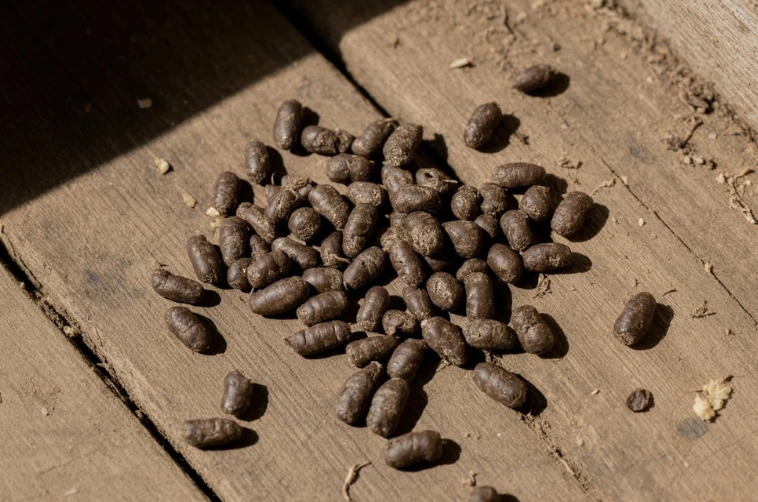
Rat droppings are dark, oblong pellets that are easy to recognize once you know the size and shape. They are noticeably larger than mouse droppings and noticeably smaller than squirrel pellets, with tapered ends rather than rounded ones.
Size and Shape
Roof rat droppings — the most common species in Central Florida — are typically 1/2 inch long and 1/8 inch wide, slim, spindle-shaped, and pointed at one or both ends. Norway rat droppings are slightly larger and thicker, around 3/4 inch long with blunter ends. Both species leave droppings shaped like dark grains of rice.
Color and Texture
Fresh droppings are dark brown to nearly black with a moist, slightly shiny surface. Within a few days they dry to a duller brown and become brittle. Texture is firm, with a slightly fibrous or grainy appearance from the rat’s varied diet.
Quantity and Pattern
Rats produce a remarkable amount of waste — a single rat can leave 30 to 50 droppings per day. As a result, an active rat infestation creates clear trails and concentrations of pellets along walls, beams, and the edges of attic insulation. If you only see a few pellets scattered in one area, the activity is likely light or recent. If you see piles or trails of dozens of pellets, you are dealing with an established population.
Where You’ll Find Rat Droppings in Central Florida
Roof rats prefer elevated, dry, dark spaces; Norway rats prefer ground-level, damp spaces. Common locations include:
- Attic insulation, especially along soffit corners, gable ends, and the perimeter walls
- Garages, especially behind boxes, on shelving, and along the perimeter
- Sheds, pool equipment closets, and lanai storage
- Pantries, under sinks, behind refrigerators, and inside cabinets
- Along baseboards in laundry rooms, garages, and basements
- On flat surfaces in pool pump enclosures and outdoor utility areas
- Inside utility cabinets, behind appliances, and on top of wall plates
How to Tell Rat Droppings From Other Rodents
Rat vs. Mouse Droppings
Mouse droppings are dramatically smaller — typically 1/8 to 1/4 inch long and very thin, like a small piece of rice. Rat droppings are usually twice the size. Volume matters too: mice produce smaller pellets but in larger quantities, while rats produce noticeably bigger droppings.
Rat vs. Squirrel Droppings
Squirrel pellets are similar in length but blunter, more barrel-shaped, with rounded ends. Rat droppings are slimmer with tapered or pointed ends. Squirrels also leave droppings scattered around nesting areas in attics, while rats tend to leave droppings along walls and travel paths.
Rat vs. Bat Droppings
Bat guano looks similar in size and color but crumbles into shiny insect-fragment powder when crushed. Rat droppings stay solid when crushed. Bat droppings also tend to pile up directly beneath a roost; rat droppings appear along walls and travel routes.
Rat vs. Cockroach Droppings
Large palmetto bug droppings are sometimes mistaken for tiny rat droppings, but cockroach droppings are even smaller (less than 1/8 inch), cylindrical with ridges, and tend to accumulate in pantries and around appliances. Rat droppings are usually larger and pointed.
What Rat Droppings Tell You About an Infestation
Beyond confirming that rats are present, the size, age, and concentration of droppings reveal the scope of the problem:
- Mostly large, blunt droppings = likely Norway rats at ground level
- Mostly small, pointed droppings = likely roof rats in attics or elevated spaces
- Mixed sizes = multiple rats of different ages, including juveniles
- Fresh, dark, shiny droppings = active infestation right now
- Old, dry, gray droppings = past activity that may have ended
- Trails along walls or beams = active rat travel routes
Health Risks of Rat Droppings
Rat droppings can transmit several serious diseases:
- Hantavirus pulmonary syndrome — a rare but often fatal lung disease spread by aerosolized droppings and urine
- Leptospirosis — bacterial infection from contaminated water and surfaces
- Salmonella — gastrointestinal illness from contaminated food or surfaces
- Rat-bite fever — bacterial illness from contact with rats or their droppings
- Allergens and asthma triggers from inhaled dust in heavily infested attics
Cleanup should always be done with gloves, an N95 respirator, and proper ventilation. Mist droppings with water or a disinfectant solution before sweeping to prevent dust from becoming airborne.
Companion Signs of a Rat Infestation
- Gnaw marks on wood, plastic, and wiring insulation
- Grease marks (dark smudges) along baseboards and beams from oily fur
- Shredded insulation, paper, or fabric nests in attic corners
- Scratching and pitter-patter sounds in walls and ceilings at night
- Pet food disappearing or bags chewed open
- Sour or musky urine smell in enclosed spaces
What to Do When You Find Rat Droppings
- Photograph the droppings and note the location and concentration
- Inspect attic, garage, and exterior walls for entry points larger than 1/2 inch
- Seal small openings with steel wool or hardware cloth as a temporary measure
- Remove food and water attractants — secure pet food, fix leaks, manage compost
- Avoid using over-the-counter poison baits, which can poison pets and create dead rats in walls
When to Call a Central Florida Rat Removal Specialist
Rat droppings almost always indicate an infestation that will get worse without professional intervention. Central Florida Trapper provides licensed rat inspection, trapping, exclusion, sanitation, and attic decontamination across the Orlando metro area. We identify every entry point — including gaps you cannot see from the ground — and seal them with materials rats cannot chew through. Professional removal is faster, safer, and more permanent than poison baits or do-it-yourself traps, and it eliminates the risk of dead rats decomposing inside your walls.