
Mouse droppings are among the most common wildlife signs in Central Florida homes — and one of the most often dismissed. Their small size makes them easy to overlook, but a few mouse pellets in a pantry, garage, or attic almost always means a much larger problem is brewing. House mice and deer mice reproduce extremely fast, and a single breeding pair can become dozens of mice within a few months. This guide explains exactly what mouse droppings look like, where to find them, how to distinguish them from rat and other rodent droppings, and what to do once you confirm a mouse infestation.
What Do Mouse Droppings Look Like?
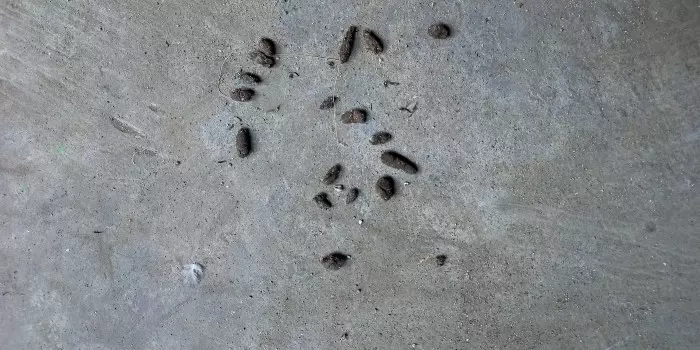
Mouse droppings are tiny, slim, dark pellets — the smallest rodent droppings you are likely to encounter inside a Florida home. They are easy to recognize once you know what to look for, particularly when compared to a grain of rice.
Size and Shape
House mouse droppings are typically 1/8 to 1/4 inch long and very thin — about the size of a grain of long-grain rice. They are pointed at one or both ends and slightly curved. Deer mouse droppings are similar in size but slightly thicker. Both species leave consistent, uniform pellets.
Color and Texture
Fresh mouse droppings are dark brown to nearly black with a slight sheen. They dry within hours to a dull dark brown and become brittle. Texture is firm and grainy, often with visible particles of bedding material or food.
Quantity
An adult mouse leaves 50 to 75 droppings per day — far more than people expect for such a small animal. This means even a single mouse quickly produces hundreds of pellets in a week, and an established colony can leave thousands. Pellets accumulate in concentrated trails along travel routes and in heavy piles near nesting sites.
Where You’ll Find Mouse Droppings in Central Florida
- Inside pantry cabinets, especially behind boxes of cereal, rice, and pet food
- Behind and beneath refrigerators, stoves, and dishwashers
- Inside silverware drawers, utility drawers, and the back of cabinets
- On garage floors, especially behind boxes and inside tool drawers
- Along baseboards in laundry rooms, mudrooms, and storage areas
- On attic insulation, especially along the perimeter and inside soffit voids
- Inside HVAC equipment closets, water heater rooms, and electrical panels
Mice prefer enclosed, dark spaces close to food and water, so droppings in kitchens, pantries, and garages are particularly common.
How to Tell Mouse Droppings From Other Rodents
Mouse vs. Rat Droppings
Rat droppings are dramatically larger — typically 1/2 to 3/4 inch long, much thicker, and easier to see from a distance. Mouse droppings are usually less than 1/4 inch long. If pellets are the size of grains of rice, they are mouse; if they are the size of raisins or larger, they are rat.
Mouse vs. Squirrel Droppings
Squirrel pellets are also larger than mouse droppings — typically 3/8 inch long and barrel-shaped with rounded ends. Mouse droppings are about half that size and have pointed ends. Location also helps: squirrel droppings appear in attics and on roofs, while mouse droppings are most common in kitchens, pantries, and along baseboards.
Mouse vs. Bat Droppings
Bat guano is similar in size and color but crumbles into a powder of shiny insect parts when crushed. Mouse droppings stay solid when crushed. Bat droppings also accumulate beneath aerial roosts, while mouse droppings line baseboards and travel routes at ground level.
Mouse vs. Cockroach Droppings
Large palmetto bug droppings can be confused with mouse pellets. Cockroach droppings are smaller (typically less than 1/8 inch), cylindrical with ridges running lengthwise, and uniform throughout. Mouse droppings are tapered and lack the ridge pattern.
What Mouse Droppings Tell You About Activity
Even a few mouse pellets indicate an active mouse. Because mice produce so much waste, a single mouse leaves obvious signs within days of taking up residence. Concentrations to look for:
- Scattered pellets along a wall, beam, or shelf = active travel route
- Piles of pellets in a corner = nesting site nearby
- Mixed sizes of pellets = adult and juvenile mice (breeding population)
- Fresh dark pellets = current activity
- Old dry gray pellets = past activity, possibly resolved
- Heavy accumulations in pantry or kitchen = serious health concern
Health Risks of Mouse Droppings
Mouse droppings pose significant health risks:
- Hantavirus pulmonary syndrome — a rare but often fatal disease primarily linked to deer mice
- Salmonella — bacterial contamination of food and surfaces
- Lymphocytic choriomeningitis — viral disease carried by house mice
- Allergens and asthma triggers, especially in children
- Secondary parasites including fleas, ticks, and mites
Cleanup should always involve gloves, an N95 respirator, and a damp paper towel to lift pellets without aerosolizing dust. Disinfect the area with a 10 percent bleach solution and discard cleaning materials in a sealed plastic bag. Never vacuum or sweep dry mouse droppings, which spreads dust into the air.
Companion Signs of a Mouse Infestation
- Gnaw marks on food packaging, plastic bags, and wood trim
- Greasy smudges along baseboards from oily fur
- Shredded paper, fabric, or insulation in cabinets and drawers
- Faint scratching or pitter-patter inside walls at night
- Musty or musky odor in enclosed spaces
- Pet food disappearing or showing chew damage
What to Do When You Find Mouse Droppings
- Photograph and note the locations to map mouse activity
- Inspect for entry points — mice can squeeze through holes the size of a dime
- Seal small openings with steel wool or hardware cloth as a temporary measure
- Store dry goods in airtight containers
- Remove pet food at night and fix any household water leaks
- Avoid over-the-counter poison baits, which create dead mice in walls and pose pet risks
Why Mouse Infestations Escalate Fast in Central Florida
Mice reach sexual maturity in just 6 weeks and can produce a litter every 3 to 4 weeks, with each litter containing 5 to 10 pups. The warm Central Florida climate keeps mice breeding essentially year-round. A handful of pellets in your kitchen today can become a colony of dozens behind your walls within a few months.
When to Call a Central Florida Mouse Removal Specialist
If you have found mouse droppings, especially in your kitchen, pantry, or attic, professional intervention is the most effective path. Central Florida Trapper provides licensed mouse inspection, trapping, exclusion, sanitation, and attic decontamination across the Orlando metro area. Mice are small enough to exploit nearly invisible gaps, and only a thorough professional inspection and sealing program addresses the entire population and its entry points.